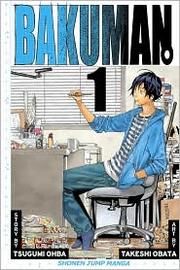
Bakuman Review: Two Boys Race to Become Manga Artists Before One Graduates and the Other Loses a Promise
by Tsugumi Ohba / Takeshi Obata
*Affiliate link — I earn a small commission at no extra cost to you.
Quick Take
- The most accurate and entertaining manga about the manga creation industry — made by the Death Note duo (Ohba and Obata), it brings genuine Weekly Shonen Jump insider knowledge to the competitive, technically demanding world of professional manga
- The dual promise structure — a professional competition and a romantic promise both driving the protagonists — gives the series a momentum that sustains 20 volumes
- 20 volumes complete; essential reading for anyone interested in manga as an industry or as a craft
Who Is This Manga For?
- Readers who want manga about creative work and the industry that produces it
- Anyone interested in how Weekly Shonen Jump actually works — the serialization process, the editorial relationship, the readership polling system
- Fans of Ohba and Obata's work from Death Note who want their style in a completely different genre
- Readers who want complete 20-volume drama with both professional and romantic resolution
Content Warnings & Age Rating
Age Rating: T (Teen) Content Warnings: The manga industry's pressure and competitive culture are depicted honestly; health strain from overwork is a recurring theme; perfectionism as both strength and problem
A T rating appropriate for the content.
Yu's Rating
| Category | Score |
|---|---|
| Story Depth | ★★★★★ |
| Art Style | ★★★★★ |
| Character Development | ★★★★★ |
| Accessibility for Non-Japanese Readers | ★★★★☆ |
| Reread Value | ★★★★★ |
Story Overview
Moritaka Mashiro has inherited his late uncle's art ability — the uncle was a Weekly Shonen Jump artist who worked himself to death pursuing success. When classmate Akito Takagi discovers Mashiro's notebook and proposes they create manga together, Mashiro agrees under one condition: he will confess to his crush Miho Azuki if she agrees to voice the heroine in the anime adaptation of whatever they create.
Miho agrees. Everyone is now committed to an almost impossible goal.
The series follows Mashiro and Takagi through the Jump submission system, their first series, cancellation, recovery, and the ongoing pursuit of a hit manga — with their relationship with their editors, competing artists, readership polls, and the specific economics of manga serialization all part of the texture.
Characters
Moritaka Mashiro — The artist whose technical skill is exceptional but whose relationship with his uncle's death creates specific pressure and specific meaning for the work. His dedication is complete and sometimes dangerous.
Akito Takagi — The writer whose natural talent and strategic intelligence complement Mashiro's artistry — he understands stories and systems, and his role in their partnership is as essential as Mashiro's drawing.
Their editors — Some of manga's most interesting supporting characters — the editorial relationship, with its specific power dynamics and genuine investment in the artists' success, is one of the series' most unique elements.
Art Style
Obata's art is at its most detailed and technically accomplished — the sequences depicting the manga creation process (penciling, inking, screentone application, deadline crunch) are drawn with the specific detail of someone who actually does this work. Character designs are clean and distinctive within a large cast.
Cultural Context
Weekly Shonen Jump's specific competitive culture — the readership poll that determines which series continues and which is cancelled, the editor-artist relationship, the tankōbon publication system, the jump from one-shot to serialization — is depicted with genuine insider accuracy. Reading Bakuman and then reading other manga makes the production process visible in a new way.
What I Love About It
The series makes me care about manga as craft in a way that changes how I read everything else. Watching Mashiro and Takagi struggle with pacing, with character design choices, with editorial feedback — and seeing how a good manga gets built incrementally, decision by decision — is genuinely educational and genuinely exciting.
What English-Speaking Fans Say
Western readers describe Bakuman as the manga that made them think differently about all other manga — understanding the industry, the editorial process, and the competitive pressures gives every other manga a new layer of meaning. The Ohba/Obata collaboration is praised as a perfect match of writer and artist discussing their own craft.
Memorable Scene ⚠️ Spoiler Warning
The chapter where Mashiro is hospitalized and Miho's response — the specific thing she does to support him without breaking their promise — is the series' most moving romantic moment and makes the unusual structure of their relationship suddenly feel completely right.
Similar Manga
- Gekkan Shoujo Nozaki-kun — Manga industry comedy, lighter tone
- Blue Period — Art creation as subject, similar craft focus
- Mangaka-san to Assistant-san — Manga creation comedy, adjacent subject
- Death Note — Same creator duo, completely different genre
Reading Order / Where to Start
Volume 1 — The Mashiro/Takagi partnership and the promise with Miho are all established in the first chapter.
Official English Translation Status
VIZ Media published all 20 volumes. Complete and available.
Pros & Cons
Pros
- Genuine insider knowledge of the manga industry
- Dual-promise structure sustains 20 volumes effectively
- Obata's art is technically extraordinary
- Complete run with both professional and romantic resolution
Cons
- The romantic promise structure may feel contrived to some readers
- Industry-specific content requires interest in the creative process
- 20 volumes is a significant commitment
Format Comparison
| Format | Notes |
|---|---|
| Individual Volumes | VIZ Media; complete |
| Digital | Available |
Where to Buy
Get Bakuman Vol. 1 on Amazon →
This post contains affiliate links. If you purchase through these links, I may earn a small commission at no extra cost to you. As an Amazon Associate, I earn from qualifying purchases.
*Affiliate link — I earn a small commission at no extra cost to you.
Written by
Yu
Manga Enthusiast from Japan
I grew up in Japan and manga literally saved me during a tough time in elementary school. My English isn't perfect, but my love for manga is real — and I want to share it with you.
Disclosure: This post contains affiliate links. As an Amazon Associate, I earn from qualifying purchases at no extra cost to you.