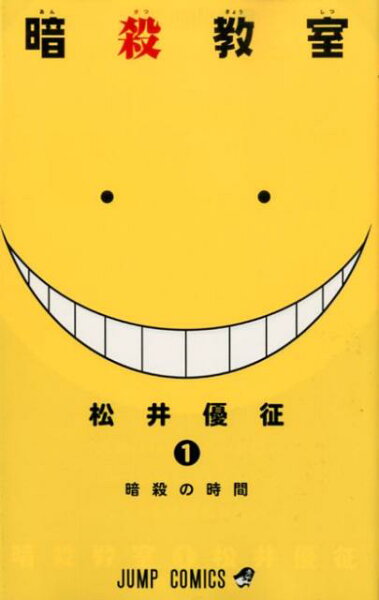
Assassination Classroom Review: The Manga Where Killing Your Teacher Is the Most Loving Thing You Can Do
by Yusei Matsui
Read the first volume. If it doesn't hook you, put it down. It'll hook you.
Buy Assassination Classroom on Amazon →*Affiliate link — I earn a small commission at no extra cost to you.
When I was in school, I was the kid the teachers stopped looking at. Not the troublemaker — the opposite. The one who sat in the back, said nothing, and got left alone because being invisible is easier to manage than being a problem. I learned early that the safest place in a classroom is the one nobody's eyes reach.
So when I picked up Assassination Classroom — expecting a dumb, fun premise about kids trying to murder a yellow octopus — I did not expect it to find that exact wound and press on it. The whole series is built on a class of students the system has officially given up on. And the only adult who treats them like they're worth anything is the monster they've been ordered to kill. I came for the joke. I stayed because, somewhere around the middle, I realized Yusei Matsui was writing about something I knew too well.
Quick Take
- A genius premise executed perfectly: your homeroom teacher is a tentacled creature who moves at Mach 20 and has promised to destroy the Earth in a year — and your assignment, as the worst class in the school, is to assassinate him before graduation.
- Funnier than you expect for most of its run, then it earns one of the most-wept-over endings in shonen.
- Age rating: T (Teen) — assassination and combat throughout, mostly comedic, with a heavy emotional final arc.
Story Overview
Something destroys 70% of the Moon, leaving it a permanent crescent. The culprit — a yellow, octopus-like creature with a perpetual grin — then walks into Kunugigaoka Junior High and announces he will be the new homeroom teacher of Class 3-E. He's given humanity a deal: he'll destroy the Earth at the end of the school year unless someone kills him first. And he wants his own students to be the ones to do it.
The students of 3-E are the school's bottom rung — the "End Class," a real fixture of Kunugigaoka's brutal ranking system, physically segregated up on a mountain campus and held up to the rest of the school as a warning of what failure looks like. The government arms them with anti-sensei knives and BBs (harmless to humans, lethal to him) and dangles a reward: 10 billion yen for whoever lands the kill.
Here's the catch that turns the whole thing inside out. The creature — the students nickname him Koro-sensei, a pun on korosenai ("can't be killed") and korosu ("to kill") — is forbidden from harming them, and he turns out to be the best teacher any of them have ever had. He tutors them out of academic ruin, coaches their assassination attempts as if they were any other subject, and quietly believes in every one of them.
The series runs on that contradiction across 21 volumes (serialized in Weekly Shonen Jump, 2012–2016). The students genuinely try to kill him — and slowly realize they don't want to. The back half pivots into the mystery of what Koro-sensei was before this: a human contract killer known as the Reaper, turned into a super-being by the antimatter experiments of the scientist Kotaro Yanagisawa. The one person who treated him with kindness in that lab, a young woman named Aguri Yukimura, died protecting him — and becoming a teacher to her class was her dying wish. By the final arc, the kids who were hired to kill him have to decide whether to honor the one thing he's asked of them.
Characters
Koro-sensei — One of the great manga characters, full stop. Absurd and near-omnipotent (Mach 20 speed, regeneration, near-invulnerable skin), yet petty, vain, and achingly human. His face shifts color to broadcast his mood, doing wordless character work in every panel. His arc is the slow unburying of the Reaper — the slum-born assassin who killed for money until a single act of kindness in a laboratory rewrote him. The monster the class is paid to destroy is the only adult who ever truly saw them.
Nagisa Shiota — The narrator, a small, soft-spoken boy everyone underestimates, including himself. He turns out to have a terrifying natural gift for assassination — the kind that unsettles even Koro-sensei and the combat instructor Karasuma. His real arc isn't about the kill; it's about working out what he wants from his life instead of what his controlling mother demands. He ends the series as a teacher himself, paying forward exactly what Koro-sensei gave him.
Karma Akabane — Brilliant, violent, allergic to authority. He's the first student to actually wound Koro-sensei — by taping a fragment of an anti-sensei knife to his palm and offering a friendly handshake. He's good at everything and committed to nothing, and his grudging slide from contempt into respect for his teacher is one of the series' best slow burns.
Kaede Kayano — Introduced as an ordinary, cheerful classmate, she's secretly Aguri Yukimura's younger sister, who infiltrated 3-E to avenge her, having had tentacles implanted in herself. Her reveal recontextualizes the whole class, and her choice — vengeance or the people who became her friends — is one of the series' turning points.
The rest of Class 3-E — Twenty-eight students, and Matsui somehow makes every single one distinct, with a moment that matters. It's one of the most generous ensemble jobs in the medium.
What I Love About It
The thing that wrecked me isn't a fight. It's the last lesson.
In the final volume, with his time finally spent, Koro-sensei does the most ordinary thing a teacher does: he calls the roll. All 28 names. And one by one, the students of Class 3-E answer — some of them through tears, all of them present. That's it. The most powerful being on the planet, who has been a walking punchline for twenty volumes, spends one of his last conscious acts confirming that every kid the system wrote off is here, accounted for, worth saying aloud.
I told you I was the kid teachers stopped seeing. So a roll call hits me in a place I don't usually let manga reach. The whole series has been quietly arguing one idea — that being written off is not the same as being worthless — and it doesn't deliver that thesis in a speech. It delivers it by having a teacher look at each member of the worst class in the school and say their name like it means something. By that point in the story, you understand it means everything. Matsui spends 21 volumes earning the right to make attendance feel like the most devastating scene in the book, and he absolutely earns it.
Memorable Scene ⚠️ Spoiler Warning
The final assassination.
After the last roll call and his goodbyes, Koro-sensei asks the students to pin his tentacles down so he can't move — so they can finish what they were assigned to do. Nagisa is the one who steps forward to land the kill. He walks up holding the knife, and his hand starts shaking so hard he can't bring it down.
And Koro-sensei — dying, the Earth's fate resting on this moment — calms his student. He tells Nagisa to smile. He talks him through it like one more lesson, the way he's talked him through everything for a year. Nagisa finally manages a smile, drives the knife into his teacher's heart, and Koro-sensei's body dissolves into countless particles of soft yellow light.
It's a manga whose entire title and premise is "kill the teacher," and when the kill finally comes, it lands as the single most loving thing anyone in the story does — for him. He always wanted to be stopped before he could become a danger, and he wanted the hands that stopped him to belong to the students he believed in. I have never read another ending that makes a child murdering a beloved mentor feel like an act of grace, and I don't expect to.
Pros & Cons
Pros
- One of the best ensemble casts in manga — all 28 students feel real
- The comedy is genuinely, consistently funny across most of its run
- The Reaper backstory recontextualizes everything without feeling like a cheap twist
- A complete, 21-volume story with an ending that earns every tear
Cons
- The premise demands a suspension of disbelief some readers simply won't grant
- The tonal pivot in the final arc blindsides anyone expecting wall-to-wall comedy
- A couple of mid-series arcs slow the pace before the finale snaps it back
- The sentiment runs hot at the end — that's either the payoff or too much, depending on you.
Is Assassination Classroom Worth Reading?
Yes — emphatically. It's a complete shonen series that delivers genuine comedy for most of its length and then converts all that goodwill into one of the most affecting endings in the medium. If you want an ensemble you'll memorize and a finale that pays off everything it set up, this is one of the safest 21-volume bets you can make.
Who Is This Manga For?
- You want something genuinely, repeatedly funny that then sucker-punches you with real emotion
- You love ensemble casts where every student in a class of 28 gets a moment to matter
- You want a complete story with an ending that earns everything it built toward
- You like premises that sound ridiculous and turn out to have real things to say about teaching, failure, and believing in someone
Content Warnings & Age Rating
Age Rating: T (Teen) Content Warnings: Assassination and combat throughout — played comedically for most of the series and seriously in the final arc; themes of academic failure and social rejection handled with care; an emotionally heavy ending; mild violence throughout
This is primarily a comedy. The violence is almost always for laughs. The final arc shifts tone hard — on purpose.
Cultural Context
Japan's school-ranking culture — Class 3-E is Kunugigaoka's "End Class": the bottom performers, physically separated from the main campus and held up as the cautionary tale that keeps everyone else competing. That's a sharpened version of real anxieties in Japanese education, where academic ranking can double as social humiliation. The series' whole emotional argument is that this approach breaks more than it builds.
Graduation as a deadline — In Japan, graduation carries real ceremonial and emotional weight as a life passage. The countdown to graduation that structures the entire series leans on that feeling deliberately — the assassination deadline is the school year.
Similar Manga
| Title | Its Approach | How Assassination Classroom Differs |
|---|---|---|
| The Promised Neverland | Children outwitting a monstrous adult system, played as dark thriller | Assassination Classroom shares the kids-vs-adults setup but runs on warmth and comedy instead of dread |
| My Hero Academia | A mentor figure who believes in an underestimated student | Assassination Classroom spreads that belief across a whole written-off class, not a chosen one |
| Blue Period | A teacher who actually sees a drifting student | Assassination Classroom makes "being seen by a teacher" the literal engine of the plot, for 28 students at once |
Yu's Rating
| Category | Score |
|---|---|
| Story Depth | ★★★★☆ |
| Art Style | ★★★★☆ |
| Character Development | ★★★★★ |
| Accessibility for Non-Japanese Readers | ★★★★★ |
| Reread Value | ★★★★★ |
Official English Translation Status
Status: Complete — all 21 volumes published by VIZ Media (December 2014 – April 2018) Translator: VIZ Media Translation Quality: Excellent — the comedy and wordplay (including the Koro-sensei name pun) carry over well
Where to Buy
Read the first volume. If it doesn't hook you, put it down. It'll hook you.
This post contains affiliate links. If you purchase through these links, I may earn a small commission at no extra cost to you. As an Amazon Associate, I earn from qualifying purchases.
*Affiliate link — I earn a small commission at no extra cost to you.
More Manga You Might Like
Action / Comedy
Mob Psycho 100
A review of Mob Psycho 100 — 16 volumes on Ura Sunday. Shigeo Kageyama (Mob) is the most powerful psychic alive and keeps his powers suppressed because he doesn't want to hurt anyone; he just wants to get better at talking to his crush. The best manga about emotional suppression and what actual strength looks like. Dark Horse Comics' English edition is complete.
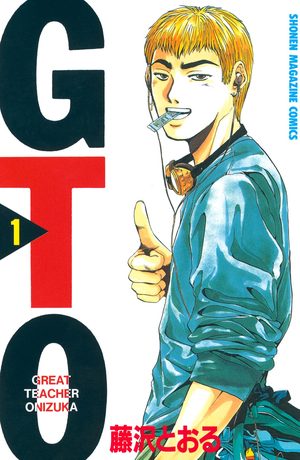
Action / Comedy
GTO: Great Teacher Onizuka
Yu's review of GTO: Great Teacher Onizuka — Eikichi Onizuka is a 22-year-old former gang leader and virgin who becomes a middle school teacher at an elite private school; what he lacks in academic credentials he compensates for with an absolute refusal to give up on any student.

Action / Comedy
Gintama
A review of Gintama — 77 volumes in Weekly Shonen Jump. Gintoki Sakata runs an odd-jobs business in an alternate Edo Japan where aliens conquered the country and samurai are forbidden to carry swords. The funniest manga ever made, hiding some of the most devastating serious arcs in the genre. VIZ Media's English edition is complete.
Action / Comedy
MxO
Yu's review of MxO — Taiga Kuzumi fails his entrance exam to a prestigious magic school but ends up enrolled anyway through a misunderstanding; he has no magic whatsoever but must pretend he does to avoid expulsion; a fast-moving comedy about competence through bluffing, unexpected friendship, and what happens when the least magical person in a magic school keeps winning anyway.
Action / Comedy
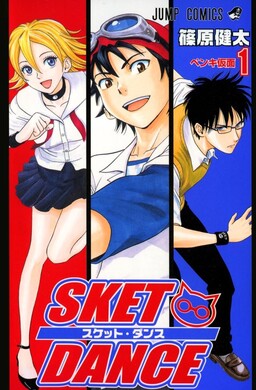
SKET Dance
Yu's review of SKET Dance — Bossun, Himeko, and Switch form the SKET-dan, a school club that helps anyone who asks with any problem; what starts as episodic comedy gradually reveals the serious backstories behind three students who understand what it means to need help.
Action / Comedy
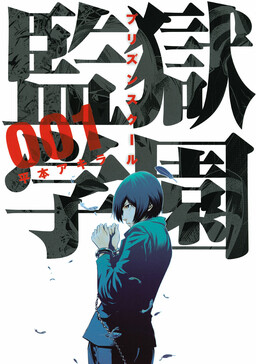
Prison School
Yu's review of Prison School — five boys enroll at a recently co-educational girls' school and are immediately imprisoned in the on-campus detention facility by the Underground Student Council for a minor violation; the series follows their attempts to escape while serving a month's sentence.
Written by
Yu
Manga Enthusiast from Japan
I grew up in Japan and manga literally saved me during a tough time in elementary school. My English isn't perfect, but my love for manga is real — and I want to share it with you.
Disclosure: This post contains affiliate links. As an Amazon Associate, I earn from qualifying purchases at no extra cost to you.