Arm of Kannon Review: A Buddhist Body-Horror Train Wreck I Couldn't Stop Reading
by Masakazu Yamaguchi
Read the first volume. If it doesn't hook you, put it down. It'll hook you.
Buy Arm of Kannon on Amazon →*Affiliate link — I earn a small commission at no extra cost to you.
I have a soft spot for manga that aim way past what they can actually land. Arm of Kannon — I found it on a bottom shelf at a used bookstore, Tokyopop spine, all nine volumes for almost nothing — is exactly that kind of book. It opens with a boy waking from a nightmare and a father coming home wrong, and within fifty pages it has already shown you things most action manga would save for the finale. Then it keeps going, and going, and somewhere around volume five it loses the plot completely and throws the whole cast 700 years into the past.
I am not going to tell you this is a good manga in the tidy sense. It is messy, sometimes ugly, and the ending genuinely falls apart. But I read all nine volumes, and I remember it more vividly than a lot of "better" series. That counts for something.
Quick Take
- A 9-volume Buddhist body-horror manga (originally serialized in Japan as Birth / バース) — grotesque, ambitious, and structurally unhinged
- The "boy infected by a divine relic" premise is the setup; the real engine is transformation, mutation, and competing factions trying to claim or kill him
- M-rated and it earns every bit of it — graphic violence, body horror, nudity, and an early sexual-assault scene that sets the tone
Story Overview
Mao Mikami is a teenager whose archaeologist father, Tozo Mikami, vanished three years ago after uncovering a Buddhist holy relic — the Arm of Senju Kannon. When Tozo finally returns home, he has aged grotesquely and is no longer human. He transforms into a monster and attacks Mao, infecting him with the relic's power. From that moment Mao's own body begins to change.
The reason everyone wants him becomes clear fast: a military organization called Garama is trying to weaponize the Arm to build enhanced super-soldiers. Mao spends the early volumes hunted across an infected forest by three forces at once — Garama's people, a unit of government-employed enhanced soldiers (the SDF), and a group of four mutants called the Manma who simply want him dead. On the other side, his sister Mayo, a swordsman from a place called Isurugi who appoints himself Mao's guardian, and a monk named Kakujo try to reach him and free him from the infection.
The mythology deepens in the middle volumes: the Arm belongs to Senju Kannon and is only supposed to take the earthly incarnation of the Buddha as its vessel, and Kakujo turns out to be a bodhisattva from a hidden woodland sect. Then the structure breaks. After the first arc resolves, the story essentially restarts with new characters who read as reincarnations, the Buddhist framework gets bolted onto Christian imagery (an "Angel Fist" enters the picture), and the guardian is flung back 700 years into feudal Japan with the Arm sealed in his own right arm. The final volumes follow him and a monk named Daikaku toward Akasaka Castle to confront the demon who now holds the relic. The ending tries to tie the past and present together and, honestly, does not manage it.
Characters
Mao Mikami — The protagonist, and a passive one by design. He doesn't wield the Arm so much as get hijacked by it; his transformations happen to him. His arc is less about heroism than about losing control of his own body and watching everyone around him decide what to do with the thing he's become.
Mayo — Mao's sister, and one of the few stable emotional anchors. While the factions treat Mao as a weapon, an asset, or a target, she is the one trying to reach the brother underneath the infection.
Tozo Mikami — The father. His return is the inciting horror: the archaeologist who found the relic comes home decades older than he should be, no longer human, and attacks his own son. He's the proof of what the Arm does to a vessel that isn't meant to hold it.
The swordsman from Isurugi — Mao's self-appointed guardian, who carries the story's most coherent action. He's the character ultimately thrown 700 years into the past with the Arm sealed in his arm, and the late-game feudal arc is essentially his story.
Kakujo — A monk who supplies the Buddhist lore and turns out to be a bodhisattva of a hidden sect. He's the manga's attempt at a theological spine, explaining what the Arm is and why it can only properly inhabit the incarnation of the Buddha.
What I Love About It
What hooked me is how committed the early volumes are to the horror of an unwilling body. Mao never gets a cool power-up moment. His father comes home, transforms, and assaults him, and the "gift" he receives is a contamination he didn't ask for and can't switch off. The forest chase that follows — three separate factions converging on one terrified kid whose own flesh keeps mutating — has a genuine nightmare logic. Yamaguchi draws the transformations with real grotesque detail: regeneration, rot, bodies coming apart. It's not stylized away from its consequences. When the SDF soldiers experiment on his unconscious body, the manga frames it as the violation it is, not as edgy decoration.
And then there's the thing I love despite myself: the ambition. The mid-series reveal that the Arm belongs to Senju Kannon and is only meant for the incarnation of the Buddha is a genuinely interesting idea — it reframes Mao's suffering as a kind of cosmic mismatch, a sacred object forced into the wrong host. For a few volumes the Buddhist framework gives the gore an actual spine. That the manga can't sustain it is a real flaw. But the reach is the reason I kept turning pages.
Memorable Scene ⚠️ Spoiler Warning
The single image I can't shake is the father's homecoming. Tozo Mikami walks back into his family's life after three years gone — and he's wrong. He's aged grotesquely, far beyond the time he was away, and the reunion curdles into a monstrous transformation as he attacks Mao and passes the infection on. It's the moment the manga tells you exactly what kind of book it is: a story where the thing that should be safest — your own father, your own body — turns into the source of horror.
The other scene that sticks is structural rather than visual: the swordsman being hurled 700 years into the past, the Arm sealed inside his right arm, waking after seven years of unconsciousness to find a monk has bound the power with an ofuda. It's the swing that breaks the series in half. I respect the audacity of throwing your whole story into feudal Japan in the back third — even though it's also where the manga finally loses the thread for good.
Pros & Cons
Pros
- Body horror with genuine commitment — transformation and mutation drawn without flinching
- The Senju Kannon mythology is a legitimately interesting frame for the gore
- A complete 9-volume English release from Tokyopop, beginning to (messy) end
- It is never boring, even when it's failing
Cons
- The art has real anatomical problems — proportions warp, sometimes undercutting the horror
- The plot restarts mid-series and never fully recovers its footing
- The early sexual-assault content and constant nudity will be a hard stop for many readers
- The ending is, by broad agreement, a crash-and-burn — this won't work for everyone, and whether the mess reads as a flaw or a charm depends entirely on your tolerance
Is Arm of Kannon Worth Reading?
If you specifically want ambitious, ugly, go-for-broke Buddhist body horror and you're forgiving of a story that derails — yes. If you want a tight, well-controlled supernatural action manga, this is not it. It's a cult oddity, and it knows what it is better than it knows where it's going.
Content Warnings & Age Rating
Age Rating: M (Mature) Content Warnings: Graphic violence, body horror, an early sexual-assault scene, nudity, religious horror
This is mature manga in the fullest sense. The first volume alone includes sexual assault and experimentation on an unconscious character. Go in knowing that.
Similar Manga
| Title | Its Approach | How Arm of Kannon Differs |
|---|---|---|
| Wolf Guy | Tokyopop-era mature seinen with grotesque violence | Wolf Guy is grounded in delinquency drama; Arm of Kannon is supernatural and Buddhist |
| Shamo | Brutal, ugly seinen about a body pushed to extremes | Shamo is realist martial-arts horror; Arm of Kannon is full supernatural mutation |
| Biomega | Body horror and supernatural action | Biomega is sleek sci-fi; Arm of Kannon is messy and steeped in religious iconography |
Official English Translation Status
Tokyopop published all 9 volumes in English (the series ran in Japan in Comic Birz from 1998–2003 under the title Birth). The English edition went out of print as of 2009, so you'll be hunting used copies — but the full run does exist in English.
Where to Buy
Read the first volume. If it doesn't hook you, put it down. It'll hook you.
This post contains affiliate links. If you purchase through these links, I may earn a small commission at no extra cost to you. As an Amazon Associate, I earn from qualifying purchases.
*Affiliate link — I earn a small commission at no extra cost to you.
More Manga You Might Like

Action / Horror
Apocalypse Zero
After an earthquake levels Tokyo, Kakugo Hagakure puts on a living suit of armor holding 3,000 dead soldiers and fights the most grotesque monsters ever drawn in shonen manga — to stop his own brother.
Action / Crime
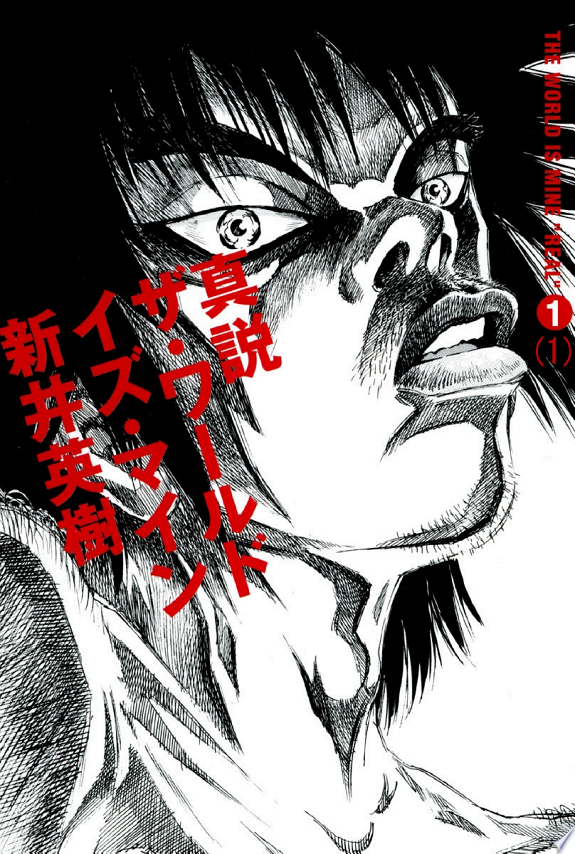
The World Is Mine
The World Is Mine follows two criminal partners — the unpredictable Mon and the calculating Toshi — on a violent crime spree across Japan, alongside a separate thread about a mysterious monster emerging in the wilderness.
Action / Historical
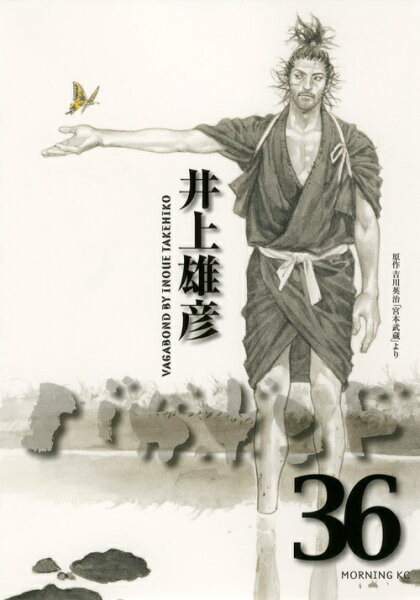
Vagabond
Yu's review of Vagabond — a manga about the historical Miyamoto Musashi's journey to become the greatest swordsman alive, and his gradual understanding that invincibility is not the same as wisdom. Visually the most beautiful manga ever published.
Action / Comedy
The Fable
Yu's review of The Fable — Akira (codename 'The Fable') is considered the deadliest assassin in Japan; his boss orders him to take a year off and live as an ordinary person without killing anyone; the comedy of an extraordinarily dangerous man trying and mostly succeeding at being normal while the criminal world swirls around him.
Action
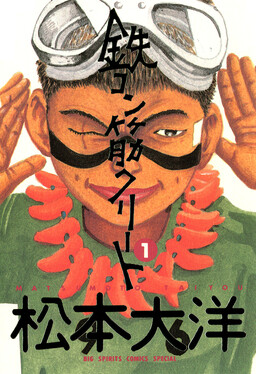
Tekkon Kinkreet
Yu's review of Tekkon Kinkreet — Black and White are two orphaned street kids who rule Treasure Town from the rooftops; when organized crime moves in to develop the city, Black and White must fight to keep what they consider theirs; a visually revolutionary manga about the psychic cost of violence and the specific love between two people who only have each other.
Action / Historical
Lone Wolf and Cub
Yu's review of Lone Wolf and Cub — Ogami Ittō was the Shogunate's official executioner; framed for treason by the Yagyū clan, stripped of his position, his wife murdered; he chose the Meifumadō — the road to hell — placing his infant son Daigorō before a ball and a sword, and the child chose the sword; they travel as assassins for hire, seeking vengeance.
Written by
Yu
Manga Enthusiast from Japan
I grew up in Japan and manga literally saved me during a tough time in elementary school. My English isn't perfect, but my love for manga is real — and I want to share it with you.
Disclosure: This post contains affiliate links. As an Amazon Associate, I earn from qualifying purchases at no extra cost to you.