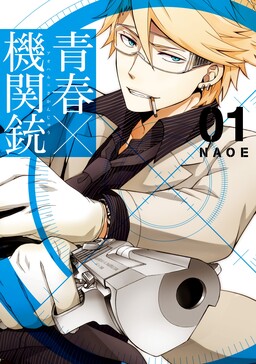
Aoharu x Machinegun Review: A Justice-Obsessed Student Council President Joins a Survival Game Team — While Hiding She's a Girl
by NAOE
Read the first volume. If it doesn't hook you, put it down. It'll hook you.
Buy Aoharu x Machinegun on Amazon →*Affiliate link — I earn a small commission at no extra cost to you.
The first time I held an airsoft gun, I was maybe fourteen, at a friend's cousin's place outside the city. I was a quiet kid back then — the kind who got left out of everything — and I remember being terrified of looking stupid in front of strangers. But the second the game started, something shut off in my head. There were no cliques out there in the trees, no one keeping score of who was popular. There was just position, breathing, and the next shot. For about twenty minutes I forgot to be afraid of people.
That's the exact feeling NAOE's Aoharu x Machinegun (青春×機関銃) keeps reaching for. On the surface it's a comedy about a girl disguised as a boy who gets dragged into survival games. Underneath, it's a story about people who don't fit anywhere finding the one place where their damage doesn't disqualify them. I came for the airsoft. I stayed because Masamune Matsuoka broke my heart.
Quick Take
- A survival game (airsoft) manga that's really a character study about abandonment, found family, and the people who use competition to avoid feeling anything
- Hotaru's justice obsession gives the comedy a register you won't find in most game manga — she's not the cool protagonist, she's the loud, stubborn moral one
- 18 volumes, complete in English via Yen Press; rated T (Teen) for airsoft combat and some heavy backstory (abandonment, past suicidal ideation)
Story Overview
Hotaru Tachibana is the student council president of her high school, but the trait that defines her isn't leadership — it's an almost compulsive sense of justice. She can't let a wrong slide. She beats up a student extorting a classmate without a second thought. So when her friend Kanae gets conned out of money by a host, Hotaru storms off to confront the man responsible — who turns out to be her neighbor, Masamune Matsuoka.
Masamune doesn't recognize her as a girl (everyone assumes she's a boy), and he denies everything. Furious, Hotaru challenges him to settle it with toy guns. The fight wrecks the host club, she loses, and she's saddled with the damages — unless she joins Masamune's airsoft team, Toy Gun Gun, to work it off. She plays one game alongside Masamune and his roommate, the manga artist Tohru Yukimura. Then something I didn't expect happens: after her debt is paid, she comes back. The games got into her. The team got into her.
The catch is that Toy Gun Gun has a hard rule — no female members, the result of something ugly that happened to a previous member — so Hotaru keeps hiding her gender to stay on. The series' real engine isn't the disguise, though. It's Masamune. His past abandonment by his mother left him terrified that anyone he relies on will leave, and the closer Hotaru gets, the more that fear curdles. The story's turning point is when he kicks her off the team — not out of cruelty, but out of self-protection — forcing her to fight her way back. The back half escalates into a full tournament arc against Star White, the team led by Nagamasa Midori, the man who first pulled Masamune out of his lowest point.
Characters
Hotaru Tachibana — She refers to herself in the third person and treats fairness like a code she's physically incapable of betraying. What makes her work as a protagonist is that her justice instinct isn't just comic-relief shouting; it's the thing that makes the broken boys around her trust her. She's not trying to win Masamune's affection or fix him out of romance — she just genuinely cannot stand to watch him give up. Her arc is learning that her bulldozer approach to "doing the right thing" doesn't always land softly on people who are barely holding together.
Masamune Matsuoka — A host by night, the heart of the manga by accident. His mother walked out on him, and at his lowest he was suicidal; survival games — and Nagamasa — are literally what gave him a reason to keep going. He co-founded Toy Gun Gun with his childhood friend Tohru. His abandonment wound is the series' true subject: he pushes people away before they can leave him first, which is exactly why he expels Hotaru from the team. His skill is real, but his relationship with winning, losing, and being relied on is the thing the story keeps pressing on.
Tohru Yukimura — Masamune's childhood friend and roommate, an ero-mangaka who draws under the pen name Kotori Piyoko. He reads as the soft, low-confidence one, and the series uses that — he's described as the most sensitive to others' moods, and he's the one who finally tells Hotaru the real history of Toy Gun Gun and the truth behind Masamune's behavior. He and Masamune once shared a dream of going pro in soccer, and that abandoned future quietly haunts both of them.
Nagamasa Midori — Leader of the rival team Star White and the man who introduced Masamune to survival games when Masamune was at his most fragile. He's not a villain; he's the person Masamune owes his life to, which makes facing him across a field of fire emotionally loaded rather than a simple rivalry. The finale folds in his twin connection to Haruki, whose own inferiority complex drives the last act.
What I Love About It
What I love is how seriously the manga takes Masamune's abandonment without ever turning him into a tragic poster. The premise sells you a goofy comedy — girl in disguise, host club, BB guns — and then quietly reveals that the funny host who started a turf war over toy guns is a man who was once suicidal and was saved by a stranger handing him an airsoft rifle. That recontextualizes everything. Suddenly his obsession with the team isn't quirky; it's a lifeline he's terrified to lose.
And the cruelest, most honest beat in the whole series follows from it: Masamune kicks Hotaru off the team. Not because she failed, not because someone discovered her secret — but because she got too important. He'd rather throw away the best thing that happened to him than survive it leaving on its own terms. The first time I read that, I sat with the book in my lap for a minute. I know that instinct. I've done a gentler version of it. A survival game manga had no business making me feel that seen, and yet NAOE plants it right in the middle of a story about toy guns and a disguised student council president, and it lands.
Memorable Scene ⚠️ Spoiler Warning
The scene that stays with me is the fallout after Masamune expels Hotaru. To earn her place back, she ends up in a one-on-one shooting contest against Nagamasa Midori — the man Masamune is most tangled up with — and it becomes a brutal contest of pure endurance rather than skill. What gives it weight isn't who pulls the trigger fastest; it's that immediately afterward, Tohru is the one waiting for her, and he finally tells her the buried history of Toy Gun Gun and what really drives Masamune.
It's a smart structural move. The actual emotional climax isn't the gunfight — it's the conversation that follows it. Hotaru has to physically prove she won't quit before she's allowed to understand why Masamune pushed her away. The manga makes her earn the truth. That ordering, action first and revelation second, is why the scene sticks: by the time you understand Masamune, you've already watched Hotaru refuse to give up on him, so the knowledge lands as confirmation instead of explanation.
Pros & Cons
Pros
- Complete 18-volume run with all three leads' backstories paid off
- Masamune's abandonment arc gives the series real emotional weight under the comedy
- Hotaru's justice obsession is a genuinely distinctive protagonist trait, not just disguise gimmickry
- The gender disguise is handled as practical plot mechanics, not milked for cheap fanservice
Cons
- Volume 1 has an awkward time-skip — Hotaru's shift from "paying off a debt" to "loving survival games" can feel rushed
- The airsoft subculture is niche and some procedural detail won't grab everyone
- The tone swings hard between broad comedy and heavy trauma; that whiplash is either the charm or the dealbreaker depending on you
Is Aoharu x Machinegun Worth Reading?
Yes — if you want a competition manga where the competition is the excuse and the wounded characters are the point. It's a complete 18-volume story with a real emotional spine: abandonment, found family, and a stubborn girl who refuses to let a broken boy quit on himself. If you need your sports/game manga to stay light, the trauma might feel like too much; if you've ever used "winning" to avoid feeling something, it'll hit harder than the premise suggests.
Similar Manga
| Title | Its Approach | How Aoharu x Machinegun Differs |
|---|---|---|
| Haikyu!! | Team sport with deep character investment and rivalries | Trades volleyball for airsoft and centers on abandonment trauma rather than pure athletic ambition |
| Sabagebu! | Survival game club played entirely for absurd comedy | Uses the same airsoft setting but grounds it in genuine emotional stakes and found family |
| Ouran High School Host Club | Gender disguise inside a host-club setting played for comedy | Shares the host-club and disguise hooks but is an action/drama, not a reverse-harem romance |
Where to Buy
Read the first volume. If it doesn't hook you, put it down. It'll hook you.
This post contains affiliate links. If you purchase through these links, I may earn a small commission at no extra cost to you. As an Amazon Associate, I earn from qualifying purchases.
*Affiliate link — I earn a small commission at no extra cost to you.
More Manga You Might Like
Action / Comedy
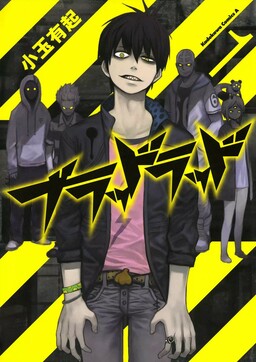
Blood Lad
Yu's review of Blood Lad — Staz Charlie Blood is a vampire territory boss in the demon world who is obsessed with Japanese anime, manga, and games; when a human girl named Fuyumi accidentally wanders into his territory and is killed by a plant monster, he promises to resurrect her — partly out of guilt, mostly because she's from Japan.
Action / Comedy
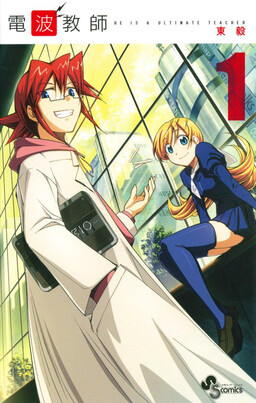
Ultimate Otaku Teacher
Yu's review of Ultimate Otaku Teacher — Junichiro Kagami is Japan's greatest physicist and also a complete shut-in otaku who only leaves his room for anime and manga; when his sister forces him to become a teacher at her school, he discovers that his otaku knowledge and online gaming skills provide unusual solutions to student problems.

Action
Soul Eater NOT!
Yu's review of Soul Eater NOT! — a spinoff set in the same Death Weapon Meister Academy as Soul Eater, following Tsugumi Harudori, a new student who is a weapon but not yet a skilled one; she must choose between two potential meisters — the calm Meme and the earnest Anya — while navigating first-year academy life.
Action / Comedy
Is This a Zombie?
Yu's review of Is This a Zombie? — Ayumu Aikawa was murdered and resurrected as a zombie by a necromancer named Eucliwood; when he accidentally absorbs the powers of a magical garment girl (masou shoujo) named Haruna, he finds himself fighting monsters in her place — in her outfit.
Comedy / Action
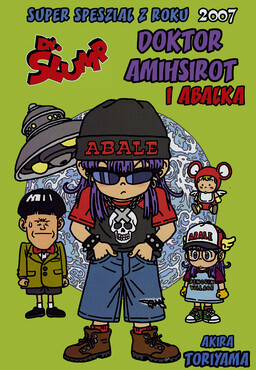
Dr. Slump
Yu's review of Dr. Slump — Senbei Norimaki is a not-very-good inventor who creates the perfect android girl, Arale, who is stronger than any human, has perfect vision but is terribly nearsighted without her glasses, and has the complete absence of self-preservation instinct that characterizes someone who cannot be hurt.
Mystery / Action
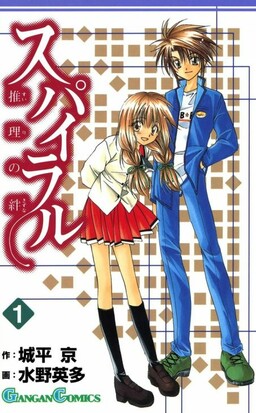
Spiral: Bonds of Reasoning
Yu's review of Spiral: Bonds of Reasoning — Ayumu Narumi's brother Kiyotaka, a genius detective, disappeared two years ago leaving only the words 'Blade Children'; Ayumu, a high school student with exceptional deductive ability, begins encountering the Blade Children — cursed individuals with exceptional abilities — and the mystery his brother left behind.
Written by
Yu
Manga Enthusiast from Japan
I grew up in Japan and manga literally saved me during a tough time in elementary school. My English isn't perfect, but my love for manga is real — and I want to share it with you.
Disclosure: This post contains affiliate links. As an Amazon Associate, I earn from qualifying purchases at no extra cost to you.