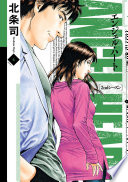
Angel Heart Review: The City Hunter Manga Where the Bullet-Proof Womanizer Becomes a Father
by Tsukasa Hojo
Read the first volume. If it doesn't hook you, put it down. It'll hook you.
Buy Angel Heart on Amazon →*Affiliate link — I earn a small commission at no extra cost to you.
I grew up on City Hunter. The 100-ton hammer, the mokkori jokes, the way Ryo Saeba could shoot a coin out of the air and then get smacked across Shinjuku for hitting on a client — that was comfort reading for a kid who didn't have many friends. So the first time someone told me there was a manga where Ryo raises a daughter, I didn't believe them. The Ryo I knew was a perpetual teenager in a grown man's coat. The idea of him being a parent felt like a joke.
It isn't a joke. Angel Heart is the strangest, most tender thing Tsukasa Hojo ever did with these characters, and it took me a long time to be ready for it. It starts with a death that I, as a City Hunter fan, was not prepared to read. And then it spends 33 volumes asking whether the part of a person that mattered can survive inside someone else.
Quick Take
- A parallel-world take on City Hunter where Kaori dies and a teenage assassin inherits her heart
- The real subject isn't romance or revenge — it's Ryo learning to be a father
- Rated T (Teen): gun violence, a suicide attempt, assassin backstories, and a lot of grief
Story Overview
In this story, Hojo does something brutal up front. Kaori Makimura — Ryo's partner through the entire run of City Hunter, and in this timeline his fiancée — is hit by a truck while pushing a child out of its path. She was on her way to take wedding photos with Ryo. Her heart is harvested for transplant.
Across the sea, in Taiwan, a girl called Xiang-Ying has just tried to kill herself. She was raised by the Zhuque Corps, a unit of the Zheng Dao Hui crime syndicate, and trained from childhood into a weapon — designation Number 27, codename "Glass Heart." After a mission breaks something in her, she jumps. She should be dead. Instead, the syndicate intercepts Kaori's harvested heart and puts it inside her.
She wakes up changed. There's a name in her chest she's never heard — Ryo — and a pull toward a man and a city she has no memory of. The bulk of the manga is Glass Heart traveling to Shinjuku, finding Ryo, and the two of them building a life that neither of them was designed for: he, a sweeper who only knew how to grieve through his old womanizing habits; she, an assassin who doesn't know how to be a daughter. Ryo eventually adopts her. The later arcs unspool her real origins — she is the lost biological daughter of Li Jian-Qiang, the syndicate boss — and force both of them to choose the family they made over the blood they came from.
Important framing: Hojo wrote in the first volume that Angel Heart shares characters with City Hunter but is not its continuation. It's a parallel world. Kaori dying here doesn't unwrite the City Hunter you love. That permission to read it as a "what if" is the only reason I could get through the opening.
Characters
Xiang-Ying / Glass Heart — A killer learning to be a person, with a physical anchor most "assassin finds humanity" stories don't have: she isn't choosing to feel warmth, she's receiving it through a heart that isn't hers. Her arc runs from a hollow weapon who interprets the world in lethal terms toward a teenager who actually wants to live. Her fish-out-of-water moments are genuinely funny — she'll calmly suggest shooting out a car's engine to make it stop — and the comedy is the point: every absurd misunderstanding is a measure of how far she still has to travel toward normal.
Ryo Saeba — The same City Hunter, written older and sadder. Hojo lets the comedy stay — the leering, the goofball deflection — but reframes it as avoidance. This is a man who lost the one irreplaceable person and didn't know any way to hold the grief, so he reached for his oldest habits. Xiang-Ying's arrival is what gives him somewhere to put all of that: a kid to protect, a reason to grow up. Watching the eternal manchild of City Hunter slowly become a father is the spine of the whole series.
Kaori Makimura — Dead in the first act, and present on every page after. Her heart, and seemingly some echo of her, lives on inside Xiang-Ying, occasionally reaching Ryo through her. She's the absence the entire story is shaped around.
Falcon (Umibozu) — Ryo's old friend and rival, now running a café, blind but able to "read" anyone who walks in. He's the steady presence that holds Ryo together during the worst of the grief. Saeko Nogami, the Shinjuku police connection, and Liu Xin-Hong — Glass Heart's childhood friend from assassin training, Number 36, loyal to her unto death — round out the cast.
What I Love About It
What gets me about Angel Heart is that it took the least serious character in my childhood and made fatherhood the most serious thing he ever did. The Ryo Saeba of City Hunter could not be trusted with a houseplant. The Ryo of Angel Heart is trying to raise a traumatized teenage assassin and keep her alive in a city full of people who want her dead. Hojo doesn't erase the old Ryo to do it — the mokkori gags are still there — he just lets you see them for what they always were: a man hiding from how much he feels.
And the central conceit is the kind of swing only a veteran would attempt. The heart transplant isn't sci-fi window dressing; it's the whole emotional engine. Xiang-Ying carries Kaori's heart, which means the family Ryo lost and the family he builds are literally the same organ. As Tia Kalla put it in her Women Write About Comics piece, Hojo "centers family in the story" rather than romance — the father-daughter bond is the real love story here. That's a bolder choice than another round of action-comedy, and it's why the manga has stayed with me longer than I expected.
Memorable Scene ⚠️ Spoiler Warning
The death that opens the story is the image I can't shake. Kaori, in her own clothes, on an ordinary day, on her way to take wedding photos with Ryo — and she sees a child in the path of a truck. She doesn't hesitate. She shoves the kid clear and takes the hit herself.
What makes it land isn't gore or melodrama. It's that this is exactly who Kaori was in City Hunter: the one who looked after people, the one whose first instinct was to protect someone smaller. Hojo kills her doing the most Kaori thing imaginable, and then has her heart — that specific, protective heart — go into a girl who was raised never to protect anyone. The entire manga is the slow proof that the impulse survived the transplant. When Glass Heart later risks herself for someone weaker, you understand the heart is still beating the way it always did. That circle, set up in the first chapter and paid off across 33 volumes, is the kind of thing that makes me trust a creator completely.
Pros & Cons
Pros
- Turns Ryo Saeba's arrested development into a real, earned arc about fatherhood
- The transplant premise is used as genuine emotional architecture, not a gimmick
- Hojo's art is as polished and expressive as anything in his career
- Glass Heart's fish-out-of-water comedy balances the grief without cheapening it
Cons
- Opens by killing a beloved City Hunter character — that's a wall for some fans
- The "parallel world, not a sequel" framing matters; read it the wrong way and the death feels like a betrayal
- 49 volumes total across both seasons is a long commitment
- No complete official English edition exists, so you'll need Japanese or fan effort to finish it
- It's far more somber than City Hunter — if you came for the comedy, this won't work for you
Is Angel Heart Worth Reading?
For City Hunter fans, yes — as long as you read it as Hojo intended, a parallel "what if" rather than canon. It trades the action-comedy highs for a quieter, sadder story about a man becoming a father and a weapon becoming a person. If that trade sounds wrong to you, skip it; if it sounds brave, it's one of Hojo's best.
Cultural Context
City Hunter ran 1985–1991 and made Ryo Saeba a cultural touchstone — the lecherous, unbeatable Shinjuku sweeper whose softer half was always Kaori. Angel Heart begins from the premise that the heart of that story was always Ryo and Kaori, and explores what that bond meant by taking it away. Shinjuku is rendered with the same specificity as the original: the city as a character, its streets as a moral map.
Similar Manga
| Title | Its Approach | How Angel Heart Differs |
|---|---|---|
| City Hunter | Action-comedy with the same Ryo Saeba | Angel Heart is the somber parallel where grief and fatherhood replace the romance |
| Gunslinger Girl | Young female assassins relearning humanity | Gunslinger Girl is coldly tragic; Angel Heart believes recovery is possible |
| Black Lagoon | Hardboiled crime with moral weight | Black Lagoon is nihilistic; Angel Heart is built around tenderness and family |
Official English Translation Status
There is no complete licensed English edition. Gutsoon! Entertainment's Raijin Comics released only a handful of chapters in the early 2000s before the company went defunct in 2004, and the series has never been picked up for a full English run since. The complete story is 33 volumes (Weekly Comic Bunch) plus a 16-volume second season (Monthly Comic Zenon). To read it in full today, the Japanese print and digital editions are the only legitimate option.
Where to Buy
No English release yet. That just means you find it before everyone else does.
This post contains affiliate links. If you purchase through these links, I may earn a small commission at no extra cost to you. As an Amazon Associate, I earn from qualifying purchases.
*Affiliate link — I earn a small commission at no extra cost to you.
More Manga You Might Like
Action / Drama
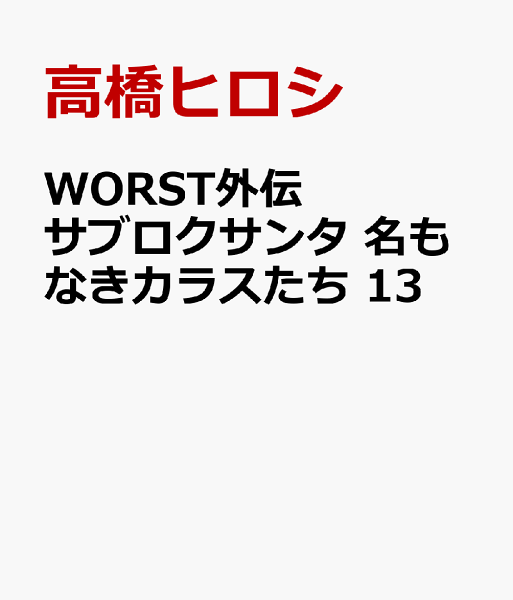
Worst
Worst is the direct sequel to Crows — returning to Suzuran All-Boys High School one generation later, with new students, new factions, and new battles for supremacy in the school known as the place where crows gather.
Action / Drama
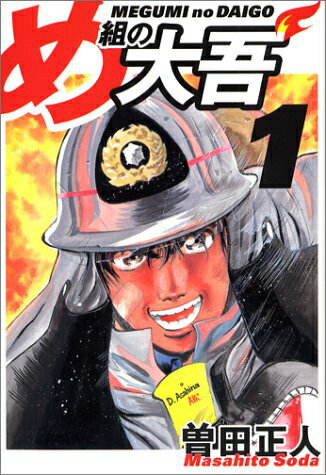
Daigo of Fire Company M
Daigo of Fire Company M follows Daigo Asahina, an extraordinary new firefighter who joins Company M — and the question of what drives a young man of exceptional ability to choose the most dangerous possible job.
Action / Comedy
The Fable
Yu's review of The Fable — Akira (codename 'The Fable') is considered the deadliest assassin in Japan; his boss orders him to take a year off and live as an ordinary person without killing anyone; the comedy of an extraordinarily dangerous man trying and mostly succeeding at being normal while the criminal world swirls around him.
Action
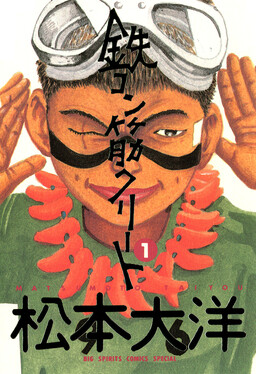
Tekkon Kinkreet
Yu's review of Tekkon Kinkreet — Black and White are two orphaned street kids who rule Treasure Town from the rooftops; when organized crime moves in to develop the city, Black and White must fight to keep what they consider theirs; a visually revolutionary manga about the psychic cost of violence and the specific love between two people who only have each other.
Action / Drama
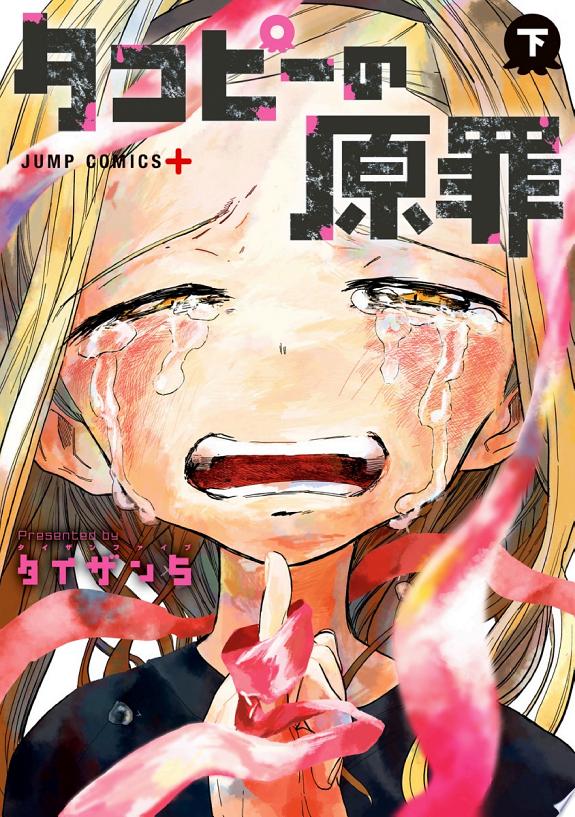
Takopi's Original Sin
Yu's review of Takopi's Original Sin — Takopi is an alien from Happy Planet sent to spread happiness on Earth; he meets Shizuka, a girl who is being bullied and whose home life is deeply troubled; the series uses Takopi's happiness abilities to examine what happiness means when suffering is real.
Action / Drama
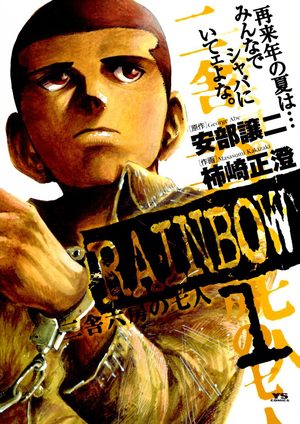
Rainbow: Nisha Rokubō no Shichinin
Yu's review of Rainbow — six juvenile delinquents are sent to a brutal reformatory in 1955 Japan and placed in Cell 6, where they bond with their cellmate Rokurouta Sakuragi, a former boxer who teaches them what it means to survive with dignity.
Written by
Yu
Manga Enthusiast from Japan
I grew up in Japan and manga literally saved me during a tough time in elementary school. My English isn't perfect, but my love for manga is real — and I want to share it with you.
Disclosure: This post contains affiliate links. As an Amazon Associate, I earn from qualifying purchases at no extra cost to you.