
Angel Densetsu Review — A Sweet, Kind Boy Has the Face of a Demon, and His Entire School Has Decided He Is Their New Delinquent King
by Norihiro Yagi
Read the first volume. If it doesn't hook you, put it down. It'll hook you.
Buy Angel Densetsu on Amazon →*Affiliate link — I earn a small commission at no extra cost to you.
I read Angel Densetsu after I read Claymore. Norihiro Yagi is one of my favorite manga artists, and I wanted to see where his career started. What I expected was something rougher than Claymore. What I got was one of the funniest comedy manga I have ever read.
This is the manga's open secret: Yagi was always a great character writer. Claymore had to find ways to express that through dark fantasy. Angel Densetsu lets it run free.
Quick Take
- Norihiro Yagi's 15-volume Monthly Shonen Jump manga (1993–2000) — comedy of mistaken intent
- Yagi's earlier work before Claymore made him internationally famous
- Age rating: T (Teen) — comedic school violence, 1990s conventions
- No official English manga release; the OVA exists
What Is Angel Densetsu About?
Seiichiro Kitano (北野 誠一郎) is a Japanese high school freshman. His personality is universally gentle: he loves animals, helps people, is incapable of hostility toward any living creature, takes pleasure in small kindnesses. His friends from middle school remember him as the kindest student they ever knew.
His face does not match.
Kitano was born with a naturally menacing facial appearance — sunken eyes, harsh angles, a perpetual scowl-shape that he cannot change regardless of his mood. When he smiles, his face produces what looks like a sinister leer. When he is concentrating, his face produces what looks like murderous intent. When he is grateful, his face produces what looks like the cold gaze of a serial killer.
He moves to a new high school in Tokyo — St. Mary's Academy (Mariakou) — that turns out to be informally controlled by a delinquent hierarchy. On Kitano's first day, the school's current delinquent boss approaches him to assess the new student. Kitano, gentle as always, tries to be friendly. His face, as always, looks like he is about to commit murder.
The delinquent boss runs.
The next 15 volumes follow Seiichiro Kitano as the accumulated misunderstandings escalate into something Yagi calls "Angel Densetsu" — the "Angel Legend." Every kind act Kitano performs is read by the school as the casual cruelty of an inhumanly powerful boss. Every time he is confused, the school reads it as contempt. Every time he tries to help someone in a fight, the school reads it as him personally taking over a situation no other delinquent could handle. His reputation grows. New delinquent bosses arrive to challenge him. Each is, somehow, defeated by Kitano accidentally being kind in their general direction.
The manga is structurally episodic with deep ensemble character development. The recurring cast includes:
- Ryoko Kuroda — Kitano's love interest. Like Kitano, she has a terrifying facial appearance and a kind heart. Their relationship is one of the manga's quietest emotional centers
- Various delinquents — Each one Kitano "defeats" through misunderstanding becomes part of his accumulated reputation
- The friend group — Several students who recognize Kitano's actual nature and serve as the manga's audience surrogate
The manga concludes in 15 volumes with the comedic premise intact and the relationships resolved.
Norihiro Yagi: The Author
Norihiro Yagi (八木 教広) is best known internationally for Claymore (2001–2014, 27 volumes) — a dark fantasy about female warriors hunting demons. Claymore is widely licensed and has an English anime adaptation.
Angel Densetsu was Yagi's earlier major work. The two manga are radically different in tone (Angel Densetsu is comedy; Claymore is grim dark fantasy) but share Yagi's specific craft of writing morally serious characters with care.
For Yagi fans approaching Angel Densetsu after Claymore: the manga will surprise you. The comedy is genuinely funny. The characters are genuinely warm. Yagi's earlier sensibility was more optimistic than his Claymore work suggests.
Who Is This Manga For?
- Yagi fans who want his earlier work
- Comedy manga readers who like misunderstanding-based humor
- Classic shonen readers willing to engage with 1990s Monthly Shonen Jump
- Japanese-language readers (unlicensed in English)
- Not for: readers seeking action; readers wanting tight plot
Content Warnings & Age Rating
Age Rating: T (Teen) — 13+ Content Warnings: Comedic school violence; 1990s social conventions around gender and delinquency; some characters defined by their appearance (the manga's premise)
The T rating is accurate. The violence is slapstick comedy.
Characters
Seiichiro Kitano — The protagonist. Gentle to a fault. Genuinely confused why everyone keeps fighting him. Yagi writes him with rare consistency — across 15 volumes, Kitano's kindness never wavers, his confusion never resolves, and his face never softens.
Ryoko Kuroda — The female lead. Similar facial appearance to Kitano. Equally kind. Their slow-developing relationship is built on the recognition that they alone in the school understand each other.
The "defeated" delinquents — Each former antagonist becomes part of Kitano's expanding inner circle once they realize he is not what he appears. Yagi develops each as an individual character.
Art Style
Norihiro Yagi's early-career art is rougher than his Claymore-era refinement. Character designs are dynamic; Kitano's face in particular is rendered with consistent grotesque-yet-sympathetic ugliness that the manga's premise requires.
The art evolved across the 7-year run; late-volume Yagi is recognizably the same artist who later drew Claymore.
Cultural Context
Monthly Shonen Jump (月刊少年ジャンプ) was a sister publication to Weekly Shonen Jump. It featured longer-form storytelling than the weekly title; multiple major manga were serialized there.
Angel Densetsu ran from 1993 to 2000 in Monthly Shonen Jump. A 1996 OVA adaptation (2 episodes) exists; it has limited international availability.
After Angel Densetsu concluded, Yagi moved to Monthly Shonen Jump's successor magazine and began Claymore, which ran 2001–2014.
What I Love About It
Kitano's friendship with Hiroaki Tanaka.
Tanaka is Kitano's school friend from the very first chapter. Unlike most of the school, Tanaka quickly figures out that Kitano is actually a sweet person, not a delinquent king. Tanaka spends the rest of the manga as Kitano's primary friend, audience surrogate, and the character who has to explain to other characters that Kitano is, in fact, just being kind.
What I love is what Yagi does with Tanaka. The character could easily be a comic relief sidekick. Yagi makes him a person. Tanaka has his own family situation. He has his own crushes. He has his own anxieties. He is also unwaveringly loyal to Kitano, not because Kitano is impressive, but because Kitano is actually his friend.
Their friendship is the manga's emotional backbone. The misunderstanding-comedy premise generates the chapters; the Kitano-Tanaka friendship is what makes the chapters add up to something. Yagi was, even at age 22 in 1993, already a careful writer of friendship.
What English-Speaking Fans Say
Angel Densetsu has limited English-language reach because of the lack of license. Among Yagi enthusiasts and 1990s shonen historians, it is consistently recommended.
The 1996 OVA had some international circulation; the manga itself remains Japanese-only.
Memorable Scene ⚠️ Light Spoiler
The first conversation between Kitano and Ryoko Kuroda.
Without spoiling specifics: somewhere in the early volumes, Kitano meets Ryoko Kuroda. She has, like him, a face that frightens people. Like him, she is gentle. They have, like him, been misread their entire lives.
Their first conversation is one of the manga's quietest sequences. Two people who look terrifying recognize each other. They do not pretend to be otherwise. They just talk — about ordinary things, the weather, the school day. The conversation is the first time either of them has been seen as a person rather than as a facial threat.
Yagi draws the scene small. There is no dramatic music-cue equivalent. The reader, who has spent the early volumes watching Kitano be misread, recognizes immediately what is happening. Kitano has met another person like him. The recognition is its own emotional event.
The rest of the manga's romance is built on this single early scene. Yagi understood that sometimes the most important moments are not the dramatic ones but the quiet ones where two people see each other clearly for the first time.
Similar Manga
| Title | Its Approach | How Angel Densetsu Differs |
|---|---|---|
| Claymore (Yagi) | Same author's dark-fantasy work | Claymore is grim; Angel Densetsu is comedic |
| Bakuon Rettou | Yokoyama Mitsuteru-style biker delinquent | Different register |
| Cromartie High School | Delinquent comedy manga | Cromartie is absurdist; Angel Densetsu is sweeter |
| Rokudenashi Blues | Serious delinquent shonen | Rokudenashi is straight delinquent; Angel Densetsu inverts the premise |
Reading Order / Where to Start
Volume 1. The episodic structure means later volumes are still accessible, but the cumulative comedy benefits from reading in order.
Official English Translation Status
Angel Densetsu has no official English manga release. Shueisha has not licensed the manga to any English publisher.
The Japanese editions (15 volumes) are available physically and digitally in Japan.
Yagi's Claymore is fully available in English from VIZ Media for readers wanting his later major work.
Pros & Cons
Pros
- One of the great manga misunderstanding-comedies
- Yagi's character writing at his early peak
- 15 volumes complete with a real conclusion
- The Kitano-Ryoko relationship is rare and warm
- Tanaka is one of manga's better best-friend characters
Cons
- No English translation
- 1990s Monthly Shonen Jump conventions take adjustment
- The mistaken-identity premise requires patience
- The slow-burn comedy register is an acquired taste. It won't land for everyone, especially readers wanting faster action.
Is Angel Densetsu Worth Reading?
For Yagi fans with Japanese ability or fan-translation access: yes. The earlier sweet sibling of Claymore.
For English-only readers: read Claymore instead while waiting for Angel Densetsu to (possibly) be licensed someday.
Format Comparison
| Format | Notes |
|---|---|
| Physical (Japanese) | All 15 volumes available in Japan |
| Digital (Japanese) | Available via Japanese ebook services |
| English | None — unlicensed |
| OVA (1996, 2 episodes) | Limited international availability |
Where to Buy
No English release yet. That just means you find it before everyone else does.
*Affiliate link — I earn a small commission at no extra cost to you.
More Manga You Might Like
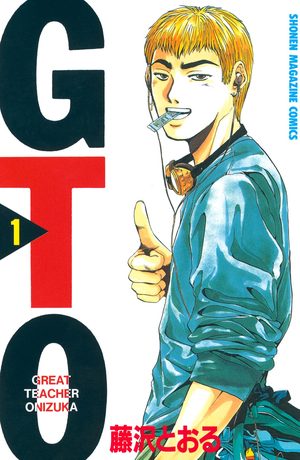
Action / Comedy
GTO: Great Teacher Onizuka
Yu's review of GTO: Great Teacher Onizuka — Eikichi Onizuka is a 22-year-old former gang leader and virgin who becomes a middle school teacher at an elite private school; what he lacks in academic credentials he compensates for with an absolute refusal to give up on any student.
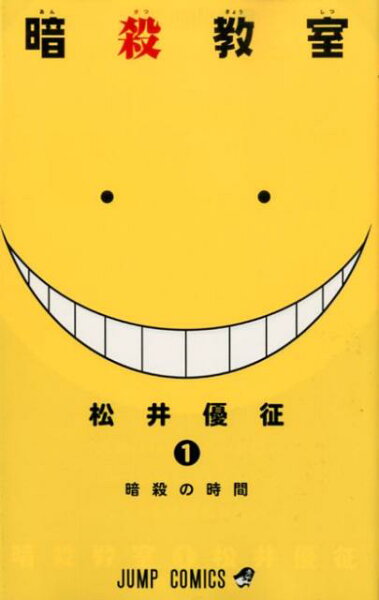
Action / Comedy
Assassination Classroom
Yu's review of Assassination Classroom — 21 volumes about a class of underachievers assigned to kill their alien teacher before he destroys the Earth. The funniest manga about murder, and the most moving manga about being seen by a teacher who refused to write you off.

Action / Comedy
MxO
Yu's review of MxO — Taiga Kuzumi fails his entrance exam to a prestigious magic school but ends up enrolled anyway through a misunderstanding; he has no magic whatsoever but must pretend he does to avoid expulsion; a fast-moving comedy about competence through bluffing, unexpected friendship, and what happens when the least magical person in a magic school keeps winning anyway.
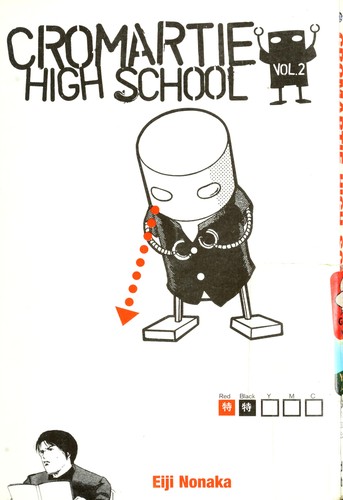
Comedy
Cromartie High School
A review of Cromartie High School, the surreal comedy manga set in Japan's most infamous delinquent school — where a normal student enrolls by mistake.
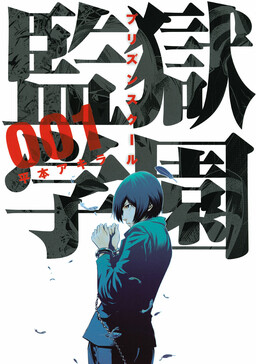
Action / Comedy
Prison School
Yu's review of Prison School — five boys enroll at a recently co-educational girls' school and are immediately imprisoned in the on-campus detention facility by the Underground Student Council for a minor violation; the series follows their attempts to escape while serving a month's sentence.
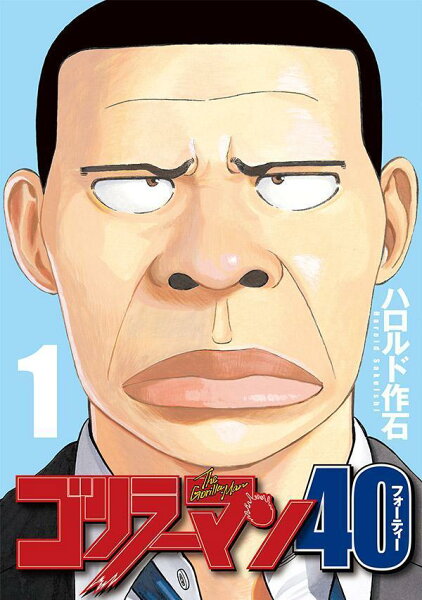
Action / Comedy
Gorillaman
Gorillaman follows Kumata Masao, a transfer student whose intimidating appearance — enormous, powerful, silent — leads everyone at his new school to assume he is the most dangerous delinquent alive, when in fact he simply wants to attend school without incident.
Written by
Yu
Manga Enthusiast from Japan
I grew up in Japan and manga literally saved me during a tough time in elementary school. My English isn't perfect, but my love for manga is real — and I want to share it with you.