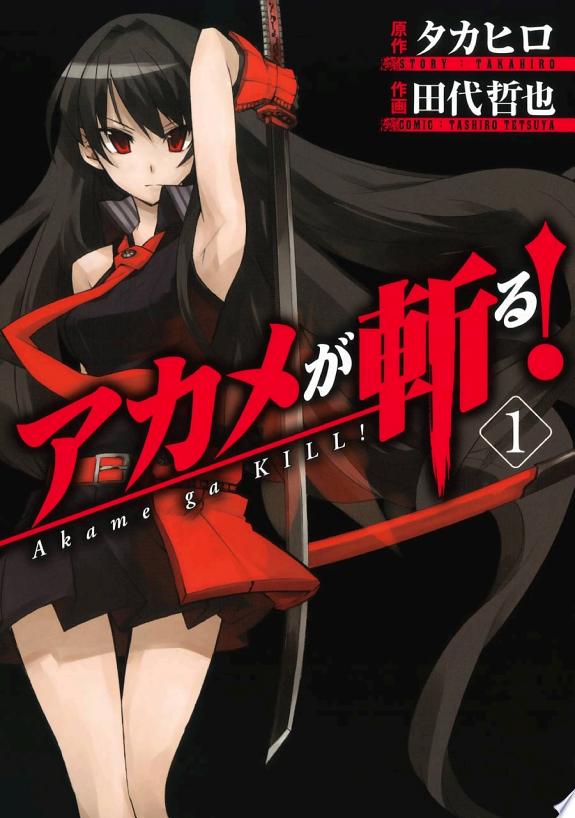
Akame ga Kill! Review: The Assassin Manga Where Loving a Character Is a Bad Idea
by Takahiro (story) / Tetsuya Tashiro (art)
Read the first volume. If it doesn't hook you, put it down. It'll hook you.
Buy Akame ga Kill! on Amazon →*Affiliate link — I earn a small commission at no extra cost to you.
I started Akame ga Kill! the way I think a lot of people did — I'd seen everyone online warning each other not to get attached to anybody, and I went in thinking that was just internet hype. Edgy fans being dramatic. The first volume reads almost like a normal shonen adventure: a bright-eyed country boy arrives in the capital, gets robbed, gets a wake-up call about how cruel the world really is, and falls in with a group of assassins. I remember relaxing into it, thinking I knew the shape of the thing.
Then it kept its promise. And it kept it again. And again. By the time I closed volume 15, I'd stopped trusting any quiet moment, any victory, any character standing on a battlefield catching their breath. That's the strange genius of this manga — it teaches you, through repetition, that caring is dangerous. And somehow I cared anyway.
Quick Take
- A poor villager named Tatsumi joins Night Raid, the assassination wing of a revolution against a corrupt empire — and the manga proceeds to kill off its cast with a commitment almost nothing else in shonen-adjacent action matches
- 15 volumes, complete, with a real ending — and a manga ending that differs sharply from the more famous anime
- Rated M (Mature) for graphic violence, on-page torture, and frequent deaths of major characters
Story Overview
Tatsumi leaves his starving village with two childhood friends to make money in the Imperial Capital and send it home. The reality of the capital hits fast: the boy emperor is a child, and the real power is Prime Minister Honest, who feeds his appetites while the country rots and the people are bled dry. Within his first night Tatsumi loses both friends to the casual cruelty of the nobility.
He's recruited into Night Raid, the assassination cell of the Revolutionary Army. Each member wields a Teigu (Imperial Arm) — rare, named weapons with unique powers, of which only forty-eight exist. Night Raid's job is targeted killing: nobles, torturers, corrupt officials. The manga is honest that these are murders, not duels, and that the people doing them are killers even when their cause is just.
The turning point comes when the Empire forms the Jaegers, an elite counter-force led by General Esdeath, the strongest fighter in the story and a sadist who, inconveniently, falls obsessively in love with Tatsumi. From there it becomes attrition: Night Raid against the Jaegers, the Revolutionary Army marching on the capital, and a body count that does not spare the people you've come to love. The finale is a full-scale assault on the capital, Akame's last duel with Esdeath, and an ending that — unlike the anime — leaves a thin thread of hope for the survivors.
Characters
Tatsumi — The protagonist, a sword-fighter from the countryside whose idealism is sanded down rather than broken. He inherits the Teigu Incursio (Demon Armor) from Bulat. In the manga's climax his body, pushed past its limit by Incursio, transforms into a dragon-like form; Akame is forced to stab him with her poison blade to stop the rampage. The epilogue reveals he survived — permanently changed, immune to the poison, living quietly afterward.
Akame — The title character. The deadliest fighter in Night Raid, wielding Murasame, a katana whose single cut delivers an instantly lethal poison ("one slice kill"). Her flat, cold surface hides deep loyalty and grief; she was raised as a child assassin alongside her sister and defected. Her arc ends with her using Murasame's trump card — which permanently transforms her — to defeat Esdeath, then leaving to hunt down remaining threats abroad.
Esdeath — The Empire's strongest general and the manga's most memorable figure. Raised by a Darwinist hunter-tribe, she believes the strong devour the weak, and she's genuinely, horrifyingly content with that worldview. Her ice Teigu lets her freeze enemies and, at the limit, freeze time itself. Her one human contradiction is her love for Tatsumi. After his death she tries to freeze everything around her and is killed by Akame's trump card; she chooses to freeze herself with Tatsumi's corpse.
Mine — A pink-haired sniper with the railgun-like Teigu Pumpkin, which fires stronger when she's in danger. She and Tatsumi become the central couple. She sacrifices Pumpkin to take down General Budo during the mission to rescue Tatsumi, then falls into a coma — and in the epilogue she recovers, and she and Tatsumi spend their lives together.
Prime Minister Honest — The rot at the center. A grotesque, gluttonous manipulator who controls the child emperor and wears a crown-Teigu that can break other Imperial Arms. He's killed by Leone, who — already mortally wounded — punches his face in and breaks his spine before dying.
What I Love About It
The commitment to consequences. Almost every action manga quietly protects its main cast — the impossible odds resolve, the wounded survive, the named characters walk away. Akame ga Kill! refuses that contract early and never picks it back up. The deaths aren't all spectacular boss fights, either; some come from a single bad matchup, a moment of overconfidence, a trap. That randomness is the point — it mirrors real war, where competence doesn't guarantee survival.
What sells it for me is that the manga earns each death emotionally before spending it. Sheele, the clumsy, gentle assassin who can barely function in daily life but turns lethal with her giant scissors, gets a quiet character beat about finding her one talent — and then she's killed protecting Mine, devoured by Seryu's biological Teigu Koro. Bulat, the openly gay mentor figure with the pompadour, trains Tatsumi, jokes with him, and then is fatally poisoned in the Three Beasts battle — passing Incursio to Tatsumi with his last strength. By the time the deaths pile up, you're not reading shock value; you're reading loss. That's a much harder thing to write, and Tashiro and Takahiro pull it off more often than they miss.
Memorable Scene ⚠️ Spoiler Warning
The one that stuck with me is Lubbock's death. Lubbock is Night Raid's green-haired joker — a self-described pervert, the comic-relief guy, the one you assume the story keeps around for levity. He wields Cross Tail, a near-invisible reel of wire he can shape into weapons, armor, and traps, and he's quietly one of the smartest people in the group.
In the capital infiltration arc he gets teleported by Syura into a trap. Cornered, alone, no backup coming, he doesn't panic into a heroic monologue — he thinks, and he manages to kill Syura. And then, in the moment right after the win, Syura's minions impale him on spears. The win and the death land almost simultaneously. There's no rescue, no last-second power-up, no comrade arriving in time. The character you'd bet money was "safe" because he was funny dies in a dirty back-alley ambush right after his greatest moment. That sequence is where I fully understood the manga: being clever, being likable, even winning — none of it buys you safety here.
What English-Speaking Fans Say
Akame ga Kill! has a large Western following, largely from the anime, which famously diverged from the manga — the anime kills off several characters (including Tatsumi and Mine) who survive in the manga, and improvises its own ending because it caught up to ongoing source material. Among Western readers, the most common talking point is exactly that split: many who came from the anime and then read the manga prefer the manga's more hopeful, more deliberate conclusion. The character deaths remain the single most-discussed element of the series in English fandom.
Pros & Cons
Pros
- 15 volumes, fully complete, with a definitive ending
- Character deaths that carry genuine narrative and emotional weight, not just shock
- The Teigu system is inventive and gives each fight a distinct logic
- Esdeath is one of the better-written villains in the genre
- A manga ending that's notably stronger than the anime's
Cons
- The violence is graphic and the torture (especially around Seryu and the Empire) is genuinely grim
- Some characters die before their arcs fully develop — that's the design, but it can feel abrupt
- The political worldbuilding stays fairly broad-strokes; this is a character-and-action story more than a deep political one
- The "no one is safe" hook means investment is risky — that's either the whole appeal or a dealbreaker depending on you
Is Akame ga Kill! Worth Reading?
Yes — if you want a complete action series that treats death as permanent and uses it to make its stakes real, with a creative weapon system and a standout villain. Go in knowing it's graphic and that it will kill people you like. If you've only seen the anime, the manga is worth reading specifically for its different, more hopeful ending.
Who Is This Manga For?
- Readers who want dark action where deaths actually stick
- Fans of anti-hero stories about killers fighting for a real cause
- Anyone wanting a complete action manga with escalating stakes and a real finale
- Anime watchers who want the manga's alternate (and better-regarded) ending
Content Warnings & Age Rating
Age Rating: M (Mature) Content Warnings: Graphic violence, on-page torture, frequent deaths of major characters, dark political themes
The clean, shonen-adjacent art style hides how dark this story actually gets. It is not for younger readers.
Similar Manga
| Title | Its Approach | How Akame ga Kill! Differs |
|---|---|---|
| Attack on Titan | Sprawling political tragedy with constant casualties and shifting moral lines | Tighter, faster, built around an assassin cell rather than a war epic |
| Claymore | Female warriors against monsters in a grim dark-fantasy world | Centers a revolution and human corruption rather than monster-hunting |
| Fullmetal Alchemist | Revolution against a corrupt state, more philosophical and humane | Far bloodier and more willing to kill its own cast permanently |
Reading Order / Where to Start
Start with Volume 1 — the premise is set up within a chapter. There's also a complete prequel, Akame ga Kill! Zero, which follows Akame's earlier years as an Imperial assassin; read it after the main series, not before.
Official English Translation Status
Yen Press published the complete 15-volume main series in English (2015–2018). All volumes are available in print and digital. The prequel, Akame ga Kill! Zero, is also fully released in English.
Where to Buy
Read the first volume. If it doesn't hook you, put it down. It'll hook you.
This post contains affiliate links. If you purchase through these links, I may earn a small commission at no extra cost to you. As an Amazon Associate, I earn from qualifying purchases.
*Affiliate link — I earn a small commission at no extra cost to you.
More Manga You Might Like
Action / Dark Fantasy
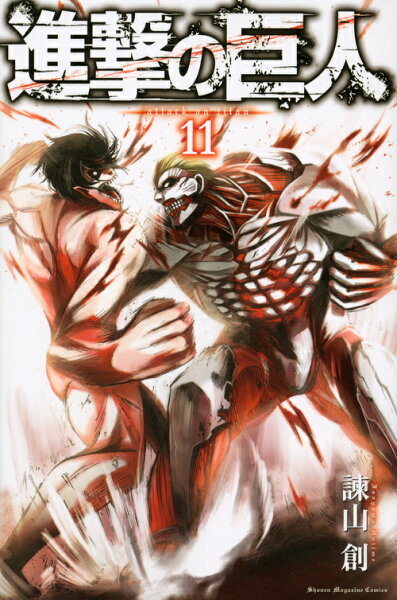
Attack on Titan
Yu's review of Attack on Titan — a manga that starts as a monster story behind three walls and ends as a story about inherited hatred, genocide, and one boy who tried to drown the world. Brutal, brilliant, unforgettable.

Action
Dogs: Bullets & Carnage
Yu's review of Dogs: Bullets & Carnage — four individuals with violent pasts navigate an underground city built on human experimentation; Heine is a modified human who heals from anything; Badou is a chain-smoking information broker; their paths converge in the depths below the city; Shirow Miwa's action manga about the price of survival.
Action / Fantasy
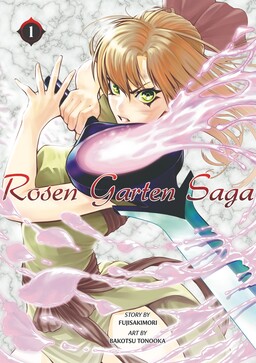
Rosen Garten Saga
Yu's review of Rosen Garten Saga — in a dark fantasy world, all legendary warriors are women; Rin is a legendary swordswoman who discovers a man named Percival — the only man who can grant a wish to the one who possesses him; the series follows the brutal combat between legendary women competing for Percival.
Action / Crime
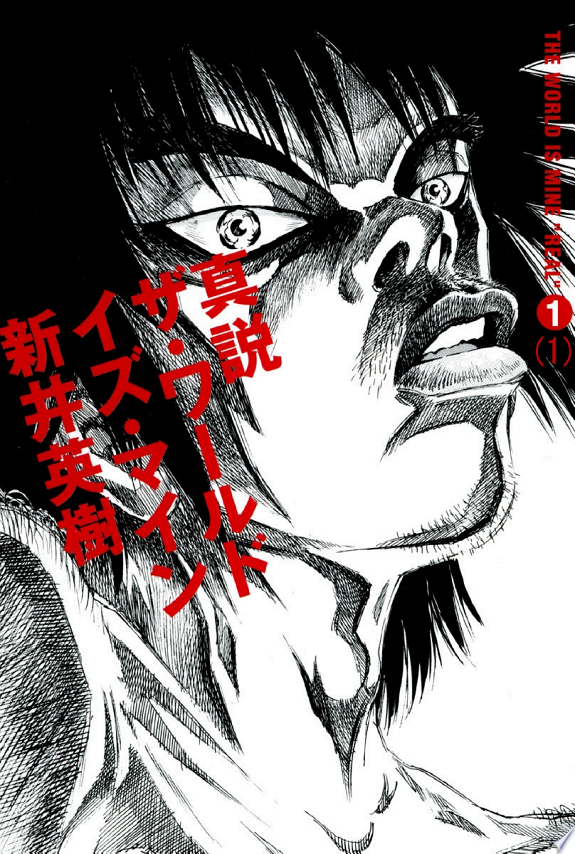
The World Is Mine
The World Is Mine follows two criminal partners — the unpredictable Mon and the calculating Toshi — on a violent crime spree across Japan, alongside a separate thread about a mysterious monster emerging in the wilderness.
Action / Comedy
The Fable
Yu's review of The Fable — Akira (codename 'The Fable') is considered the deadliest assassin in Japan; his boss orders him to take a year off and live as an ordinary person without killing anyone; the comedy of an extraordinarily dangerous man trying and mostly succeeding at being normal while the criminal world swirls around him.
Action
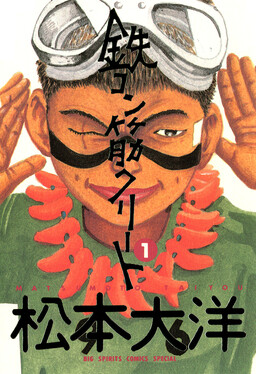
Tekkon Kinkreet
Yu's review of Tekkon Kinkreet — Black and White are two orphaned street kids who rule Treasure Town from the rooftops; when organized crime moves in to develop the city, Black and White must fight to keep what they consider theirs; a visually revolutionary manga about the psychic cost of violence and the specific love between two people who only have each other.
Written by
Yu
Manga Enthusiast from Japan
I grew up in Japan and manga literally saved me during a tough time in elementary school. My English isn't perfect, but my love for manga is real — and I want to share it with you.
Disclosure: This post contains affiliate links. As an Amazon Associate, I earn from qualifying purchases at no extra cost to you.