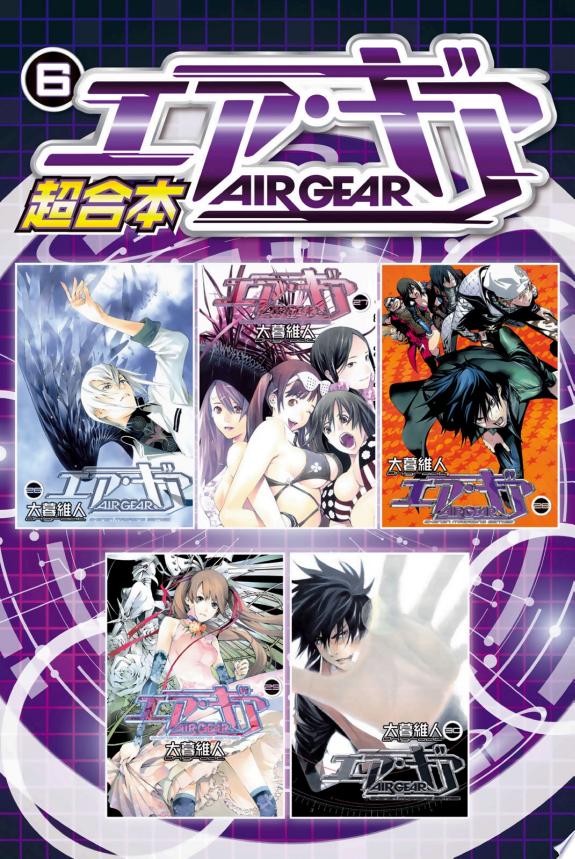
Air Gear Review: The Most Beautiful Way Oh! Great Ever Drew the Feeling of Flying
by Oh! Great
Read the first volume. If it doesn't hook you, put it down. It'll hook you.
Buy Air Gear on Amazon →*Affiliate link — I earn a small commission at no extra cost to you.
When I was a kid, the thing I wanted most was to not be on the ground. Not in a poetic way — literally. I used to climb to the top of the jungle gym at the park near my apartment after everyone else went home, sit up there alone, and look down at the empty playground where the other kids had been ignoring me an hour earlier. Being higher than everything felt like the only kind of winning available to me.
So when I first read Air Gear and got to the page where Ikki, cornered and outnumbered, runs straight up a school flagpole — corkscrewing up the vertical rail on motorized skates with so much speed he basically defies gravity — I made a sound out loud. That is the exact feeling I had been chasing on that jungle gym, except Oh! Great drew it. He took "I want to be above all of you" and turned it into the most kinetic art I had ever seen on a page.
Air Gear is not a perfect manga. I will be honest about that. But for the specific thing it does — drawing the sensation of speed and height and getting off the ground — I have never read anything that does it better.
Quick Take
- A delinquent named Ikki discovers Air Trecks (motorized inline skates) and falls into the underground world of Storm Riders, climbing toward the eight "Kings" and the legendary Sky Regalia
- Oh! Great's art for motion and aerial combat is genuinely some of the best in action manga — the story, by contrast, gets more cosmic and tangled as it goes
- 37 volumes, complete, rated M (Mature) — heavy, frequent fanservice and increasingly mature content make this strictly an adults' read
Story Overview
Itsuki "Ikki" Minami is the leader of his school's gang, the East Side Gunz — a loud, cocky brawler who lives with the four Noyamano sisters who took him in. What he doesn't know at first is that the sisters are tied to a legendary Storm Rider crew called Sleeping Forest, and that the household is full of Air Trecks: motorized skates that let riders move with superhuman speed and pull off stunts that look like flight.
Once Ikki tastes that feeling, he's hooked. He forms his own team, Kogarasumaru, and starts climbing the brutal hierarchy of the AT world. That world is organized around eight "Kings," each one mastering a different "Road" and holding a Regalia — a piece of equipment that embodies their element. At the very top sits the Sky Regalia, an object so powerful the mythology eventually claims it can control essentially any technology on Earth, up to the world's nuclear weapons. Sleeping Forest exists to protect it.
The emotional pivot of the whole series is betrayal. Ikki is mentored by a man named Sora, whom he comes to trust like an older brother — until Sora reveals himself as the true leader of the rival organization Genesis and steals the Wind Regalia. That wound is what pushes Ikki past the limits of the Wing Road he started on; he abandons it and forges his own path, the Hurricane Road, becoming the Storm King. The back half of the series escalates toward the Trophaeum Tower, the structure all Riders are ultimately drawn to, and a final confrontation over what the Sky Regalia means. The manga closes on Ikki and Ringo, reconciled, launching hundreds of hand-made paper airplanes across the sky in front of the Tower and flying among them.
Characters
Ikki Minami — Loud, arrogant, and impossibly stubborn, Ikki starts as a street brawler chasing a single sensation: flight. His arc is the spine of the manga. He begins on the Wing Road as a kind of chosen heir, has that destiny ripped away by Sora's betrayal, and instead of collapsing, he builds his own Road from his weaknesses — the Hurricane Road — and crowns himself Storm King on his own terms. The whole series is the question of whether a kid who just wanted to get off the ground can carry the weight that comes with actually rising.
Ringo Noyamano — The standout of the cast. On the surface she's a plain junior-high girl, one of the sisters Ikki lives with; underneath, she's the successor and leader of Sleeping Forest and the Thorn Queen, one of the eight Kings, sworn to protect the Sky Regalia. She also secretly backs Kogarasumaru in disguise as the masked "Crazy Apple." Her arc is the long, painful gap between her duty to the Regalia and her love for Ikki, two things that keep pulling in opposite directions.
Agito / Akito / Lind Wanijima — Three personalities sharing one body, signaled by which eye the eyepatch covers. Akito is gentle and sunny; Agito is the violent, snarling fighter forged by trauma — he was caged and forced to battle other AT users as a child. Later a third self, Lind, surfaces, tied to Professor Minami's "Brain Charger" project. As the Fang King and a member of Kogarasumaru, this character carries some of the manga's darkest material.
Simca — "Simca the Swallow," the girl who first draws Ikki deeper into the AT world. She's a recruiter and manipulator with her own agenda inside the larger war over the Sky Regalia, and her swallow motif sits in deliberate contrast to Ikki's crow.
Sora — The mentor turned antagonist. The betrayal where he reveals himself as the real head of Genesis and takes the Wind Regalia is the hinge the entire story swings on, and it's what gives Ikki his reason to stop inheriting a path and start building one.
What I Love About It
The Ikki-versus-Buccha fight in the first volume. Buccha is a massive opponent, and Ikki is outmatched on paper — so he uses the environment. He hits a move Oh! Great calls the Upper Soul 23 Roll: he takes the momentum from a wall jump, catches a vertical rail, and grinds straight up it, corkscrewing the full length of a school flagpole with so much forward speed that gravity stops mattering for a second. On the page it reads as pure ascent. Buccha loses, and then — this is so Air Gear — pledges loyalty and becomes a founding member of Kogarasumaru.
What gets me about that sequence isn't the choreography for its own sake. It's that Oh! Great found a visual language for wanting to be higher than everyone and made it literal. The panels don't just show speed; they make you feel the specific joy of leaving the ground on your own power. I have read a lot of action manga where I admire the art coldly. This is one of the few where the art made me feel the thing the character feels. That early stretch — Ikki learning Air Trecks, the rules of Storm Rider battles snapping into place — has a buoyancy the later cosmic plot can't quite recapture, but Oh! Great's hand never stops being able to draw the feeling of flight.
Memorable Scene ⚠️ Spoiler Warning
Late in Ikki and Ringo's long, unspoken thing, they end up racing each other — and Ikki, finally understanding how she feels, throws the result. Rather than beat her, he carries her across the finish line so the match ends in a draw. Then Ikki leaves the Noyamano house, and at the door Ringo kisses him goodbye — and immediately slaps him.
That one beat is the whole relationship compressed into two panels: tenderness she can't fully allow herself, anger at being seen, and the impossible bind of loving the person whose ambition threatens the thing she's sworn to protect. After hundreds of pages of her hiding behind the Crazy Apple mask and her Thorn Queen duty, the kiss-then-slap lands because it's the first time the armor slips and then immediately snaps back. It stuck with me far more than any of the series' bigger, louder, more apocalyptic set pieces.
Pros & Cons
Pros
- Oh! Great's art for motion, speed, and aerial combat is genuinely top-tier
- A complete 37-volume run with a real (if divisive) ending
- The early volumes have an energy and joy that's hard to fake
- Ringo is a more layered female lead than the genre usually bothers with
Cons
- Heavy, frequent fanservice that escalates across the run — it will be a dealbreaker for a lot of readers
- The later mythology (Regalia, Brain Charger, the Sky) gets convoluted and self-serious
- The ending splits fans hard
The fanservice isn't incidental — it's woven through the whole series and only gets more prominent. That's either tolerable background or a constant distraction depending entirely on you.
Is Air Gear Worth Reading?
If you read manga for art, yes — Air Gear contains some of the best-drawn motion in the medium, and the early arcs are a joy. If you need a tight, coherent plot and you're put off by constant fanservice, this probably isn't your series. It's a manga you read for how it looks and feels more than for where the story ultimately goes.
Who Is This Manga For?
- Readers chasing the most visually spectacular skating and aerial action in manga
- Fans of Oh! Great's style from Tenjho Tenge
- Anyone who can trade narrative tidiness for exceptional kinetic art
- Adult readers comfortable with frequent, heavy fanservice
Content Warnings & Age Rating
Age Rating: M (Mature) Content Warnings: Significant and frequent fanservice, violent action, increasingly mature content as the series progresses
The mature content is substantial and increases across the run. This is not a series for younger readers, and the fanservice is constant enough that it should factor into whether you pick it up at all.
Yu's Rating
| Category | Score |
|---|---|
| Story Depth | ★★★☆☆ |
| Art Style | ★★★★★ |
| Character Development | ★★★☆☆ |
| Accessibility for Non-Japanese Readers | ★★★☆☆ |
| Reread Value | ★★★☆☆ |
Similar Manga
| Title | Its Approach | How Air Gear Differs |
|---|---|---|
| Tenjho Tenge | Oh! Great's earlier work — martial arts, same flashy aesthetic and heavy fanservice | Air Gear trades the school-brawler frame for motion and flight, with art built around speed rather than combat stances |
| Eyeshield 21 | Sports manga with explosive kinetic energy and exaggerated athletic feats | Air Gear pushes past sport into supernatural escalation and cosmic mythology |
| Beelzebub | Delinquent protagonist, comedic tone, gang dynamics | Air Gear shares the delinquent lead but builds an entire fictional sport and hierarchy around him |
Official English Translation Status
Del Rey Manga released the first 17 volumes starting in 2006; after Del Rey's closure, Kodansha USA's Comics imprint continued the series. All 37 volumes are available in English.
Where to Buy
Read the first volume. If it doesn't hook you, put it down. It'll hook you.
This post contains affiliate links. If you purchase through these links, I may earn a small commission at no extra cost to you. As an Amazon Associate, I earn from qualifying purchases.
*Affiliate link — I earn a small commission at no extra cost to you.
More Manga You Might Like
Action / Crime
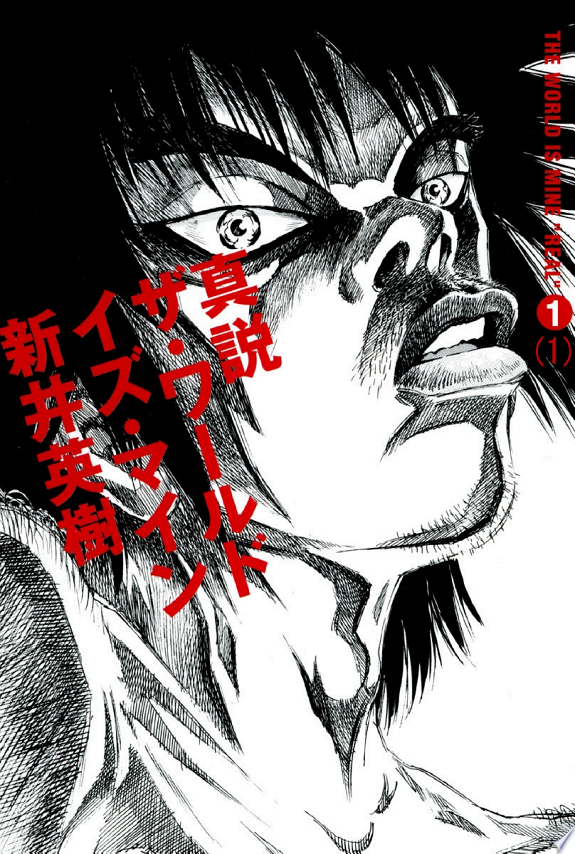
The World Is Mine
The World Is Mine follows two criminal partners — the unpredictable Mon and the calculating Toshi — on a violent crime spree across Japan, alongside a separate thread about a mysterious monster emerging in the wilderness.
Action / Comedy
The Fable
Yu's review of The Fable — Akira (codename 'The Fable') is considered the deadliest assassin in Japan; his boss orders him to take a year off and live as an ordinary person without killing anyone; the comedy of an extraordinarily dangerous man trying and mostly succeeding at being normal while the criminal world swirls around him.
Action
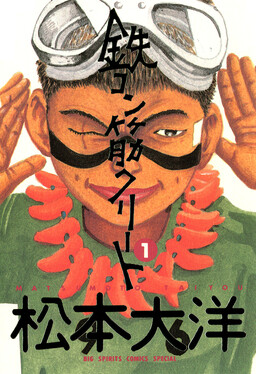
Tekkon Kinkreet
Yu's review of Tekkon Kinkreet — Black and White are two orphaned street kids who rule Treasure Town from the rooftops; when organized crime moves in to develop the city, Black and White must fight to keep what they consider theirs; a visually revolutionary manga about the psychic cost of violence and the specific love between two people who only have each other.
Action / Historical
Lone Wolf and Cub
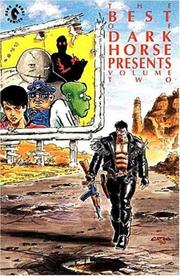
Yu's review of Lone Wolf and Cub — Ogami Ittō was the Shogunate's official executioner; framed for treason by the Yagyū clan, stripped of his position, his wife murdered; he chose the Meifumadō — the road to hell — placing his infant son Daigorō before a ball and a sword, and the child chose the sword; they travel as assassins for hire, seeking vengeance.
Action / Romance
Call of the Night
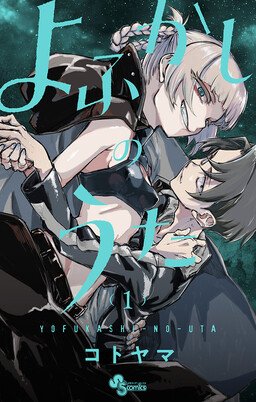
Yu's review of Call of the Night — Ko Yamori cannot sleep; unable to feel anything during the day, he starts sneaking out at night and discovers that he actually belongs in the night; when he meets Nazuna, a vampire who drinks blood from sleeping humans, he asks her to turn him into a vampire — but the only way to become one is to fall in love.
Action / Historical
Blade of the Immortal
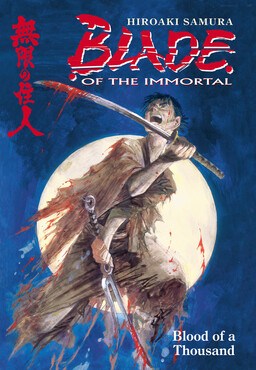
Yu's review of Blade of the Immortal — Manji is a ronin cursed with immortality by sacred bloodworms; to end the curse he must kill a thousand evil men, and he agrees to protect Rin Asano, a girl whose family was destroyed by the Itto-ryu sword school led by Anotsu Kagehisa. Hiroaki Samura's nineteen-year masterpiece, complete in 31 volumes from Dark Horse.
Written by
Yu
Manga Enthusiast from Japan
I grew up in Japan and manga literally saved me during a tough time in elementary school. My English isn't perfect, but my love for manga is real — and I want to share it with you.
Disclosure: This post contains affiliate links. As an Amazon Associate, I earn from qualifying purchases at no extra cost to you.