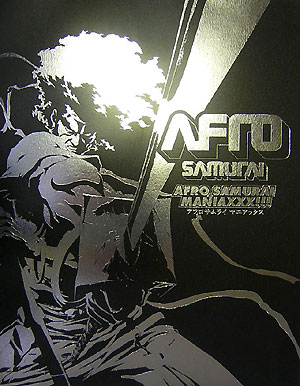
Afro Samurai Review: The Revenge Ends With Nothing to Kill
by Takashi Okazaki
Read the first volume. If it doesn't hook you, put it down. It'll hook you.
Buy Afro Samurai on Amazon →*Affiliate link — I earn a small commission at no extra cost to you.
I grew up on shonen where revenge gets a clean ending. The villain falls, the hero stands over him, and somehow the world feels balanced again. Afro Samurai is the first samurai story I read that refused to give me that. I finished the second volume sitting on my floor, headband-1 in Afro's hand, and felt cheated in a way I couldn't stop thinking about for weeks — until I realized that being cheated was the point.
I came to the manga backward, like most people. I watched the anime first, fell for Samuel L. Jackson's voice and RZA's beats, and assumed the books would be a smoother version of the same thing. They're not. Okazaki's original is rawer, meaner, and ends somewhere the anime never goes.
Quick Take
- Takashi Okazaki's hyperstylized revenge story fuses feudal-Japan samurai myth with hip-hop and Black American visual culture — it started as a self-funded dojinshi in Nou Nou Hau (1998–2002)
- Only 2 volumes, fully complete in English, with an ending that's bleaker and stranger than the famous anime
- Age rating: M (Mature) — extreme graphic violence, gore, and strong language throughout
Story Overview
The world runs on headbands. Whoever wears the Number One headband is the greatest warrior alive — said to be god-like, maybe immortal. The catch is brutal in its simplicity: only the holder of the Number Two can challenge the Number One, but anyone can challenge the Number Two. The Number Two never gets to rest.
As a child, Afro watches Justice — a Wild West gunslinger with a third arm — kill his father Rokutaro and take the Number One headband. Orphaned, Afro is taken in by a dojo run by the Swordmaster, where he trains alongside two other kids: Jinnosuke, who calls Afro his best friend and brother, and Otsuru. That fragile peace is what the manga then destroys.
When word spreads that someone now wears the Number Two headband, assassins descend on the dojo. The turning point is the massacre at the Bodhi Tree, where Afro and the Swordmaster fight off waves of killers and the dojo is wiped out. In the carnage, the Swordmaster tries to make Afro understand the true cost of carrying Number Two — and Afro, triggered by flashbacks of his father's death, kills the Swordmaster himself and takes the headband. Only Afro, Jinnosuke, and Otsuru walk away. It's right after this that Ninja Ninja first appears at Afro's side.
From there the spine is simple: Afro walks toward Justice, killing everyone who comes for the Number Two along the way. But the ending is where the manga separates itself from everything else. When Afro finally reaches Justice's temple, there's no climactic duel. Justice is already long dead — his body withers and crumbles to dust at Afro's touch. The man he built his entire life around killing was gone before he arrived. Afro takes the Number One headband anyway, then comes across the orphaned son of a man he killed, hands the boy the Number Two, and tells him to come challenge him when he's ready. The cycle just resets onto the next child.
Characters
Afro — Silent, focused, and in the manga noticeably more ruthless than his anime version; at one point he uses a crippled young woman as a human shield. He isn't a hero. He's a boy's grief that calcified into a weapon and never grew past the moment his father died. His arc isn't growth — it's the slow revelation that vengeance has no bottom.
Ninja Ninja — Loud, cowardly, comic, and explicitly imaginary: the manga reveals he's emanated from the Number Two headband itself, the part of Afro that still remembers fear, doubt, and connection. He arrives the instant Afro first takes the headband and voices everything Afro has buried.
Justice — The gunslinger who killed Afro's father, mutated by toxic waste into something diseased-looking with a third arm, utterly certain the strong are meant to rule. In the manga he's less a final boss than an absence — already a corpse by the time the story catches up to him.
Jinnosuke (Kuma) — Afro's childhood brother-figure from the dojo. He blames Afro for the Swordmaster's death and for taking Number Two, and is rebuilt with a cybernetic body, hiding behind a teddy-bear mask as the warrior called Kuma. The Swordmaster gives him a katana that belonged to his own father, Jintaro.
Otsuru — The dojo's healer and one of the three massacre survivors. She becomes a spy working against Afro before realizing her mistake, and her turn ends in tragedy.
What I Love About It
The first thing that grabbed me is purely visual: Okazaki draws like a New York street artist who studied ukiyo-e. Brush-heavy linework, basketball shoes peeking out under feudal robes, proportions built for impact instead of realism. I showed Volume 1 to a friend who'd never read a single manga, and they sat with it for an hour just looking. The style communicates before the story does — and that's rare enough that it alone justifies the book.
But what stays with me longer is Ninja Ninja. Once you know he comes out of the headband — that he's literally the discarded humanity of whoever carries Number Two — every dumb joke he cracks gets a second, sadder reading. He's the joy and fear Afro had to amputate to keep killing. Okazaki gives you the series' heaviest idea through its silliest character, and never once stops to explain it. That restraint is the whole craft of this manga to me: it trusts the image and trusts you.
Memorable Scene ⚠️ Spoiler Warning
The ending. After two volumes of Afro cutting down everyone between himself and Justice, he finally reaches the temple — and Justice is already dead. Not defeated. Dead. His body crumbles to dust. There is no duel, no last words, no catharsis. The entire purpose of Afro's life evaporates at his fingertips.
What makes it land isn't the anticlimax itself — it's what Afro does next. He takes the Number One headband, finds the orphaned boy who's been trailing him (the son of a man Afro killed), presses the Number Two into his hands, and tells him to come when he's ready. He doesn't break the cycle. He passes it down, calmly, like a chore. That image — a man handing a grieving child the exact wound that ruined his own life — is the most honest thing this manga says about revenge. The anime gives Afro a real final fight. The manga gives him dust and a successor, and it's so much colder for it.
Pros & Cons
Pros
- Visually unlike anything else in manga — every panel is an art object
- A genuine cultural synthesis, not pastiche
- Short, complete, and zero filler
- Ninja Ninja is one of manga's best companion characters, with a real idea under the comedy
Cons
- The plot is intentionally thin — this is closer to an illustrated myth than a story-driven manga
- The violence is extreme and relentless
- Depth beyond Afro and Ninja Ninja is sparse
- Some readers find Okazaki's densest action pages hard to follow
- The style is the whole pitch — it won't work for everyone's eye, and that's either the appeal or the dealbreaker
Is Afro Samurai Worth Reading?
Yes — as a piece of visual art and as one of the bleakest revenge endings in manga. If you want intricate plotting or a deep cast, look elsewhere; the cons are real. But if you want something that announces itself as unlike anything you've seen from the first panel, and an ending that refuses every easy beat the genre offers, this two-volume set delivers exactly that.
Similar Manga
| Title | Its Approach | How Afro Samurai Differs |
|---|---|---|
| Blade of the Immortal | Samurai violence with philosophical, discursive weight | Afro Samurai is pure visual kinetics — it argues through images, not dialogue |
| Lone Wolf and Cub | A revenge journey carrying a child toward the next generation | Afro Samurai trades pathos for style and ends by cursing the next child instead of protecting him |
| Dorohedoro | A grimy, art-forward world with a singular drawing style | Afro Samurai is sparser and mythic where Dorohedoro is dense and sprawling |
Official English Translation Status
Both volumes are available in English. Tor Books and Seven Seas published the manga in 2008 as the debut title of their joint Tor/Seven Seas imprint (Vol. 1, ISBN 978-0765321237). Titan Comics later reissued the series in a larger format, which is the better way to experience Okazaki's full-page art. The 2007 anime adaptation (by Gonzo, with Samuel L. Jackson and RZA) is a separate, looser telling — the manga's ending in particular is its own beast.
Where to Buy
Read the first volume. If it doesn't hook you, put it down. It'll hook you.
This post contains affiliate links. If you purchase through these links, I may earn a small commission at no extra cost to you. As an Amazon Associate, I earn from qualifying purchases.
*Affiliate link — I earn a small commission at no extra cost to you.
More Manga You Might Like
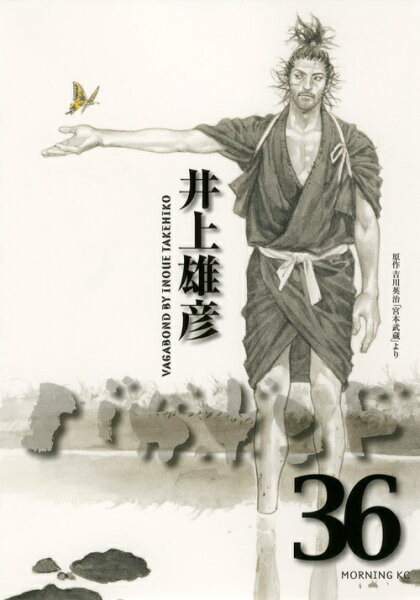
Action / Historical
Vagabond
Yu's review of Vagabond — a manga about the historical Miyamoto Musashi's journey to become the greatest swordsman alive, and his gradual understanding that invincibility is not the same as wisdom. Visually the most beautiful manga ever published.
Action / Historical
Lone Wolf and Cub
Yu's review of Lone Wolf and Cub — Ogami Ittō was the Shogunate's official executioner; framed for treason by the Yagyū clan, stripped of his position, his wife murdered; he chose the Meifumadō — the road to hell — placing his infant son Daigorō before a ball and a sword, and the child chose the sword; they travel as assassins for hire, seeking vengeance.
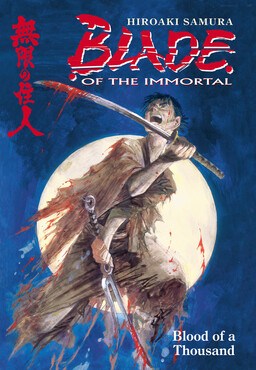
Action / Historical
Blade of the Immortal
Yu's review of Blade of the Immortal — Manji is a ronin cursed with immortality by sacred bloodworms; to end the curse he must kill a thousand evil men, and he agrees to protect Rin Asano, a girl whose family was destroyed by the Itto-ryu sword school led by Anotsu Kagehisa. Hiroaki Samura's nineteen-year masterpiece, complete in 31 volumes from Dark Horse.
Action / Historical
Lady Snowblood
Yu's review of Lady Snowblood — Yuki Kashima was born in prison to a woman who had herself imprisoned to find the men who murdered her husband and son and raped her; Yuki's sole purpose, from birth, was to be the instrument of her mother's revenge; she was trained by a Buddhist monk and became exactly what her mother needed.
Action
Tokyo Tribes
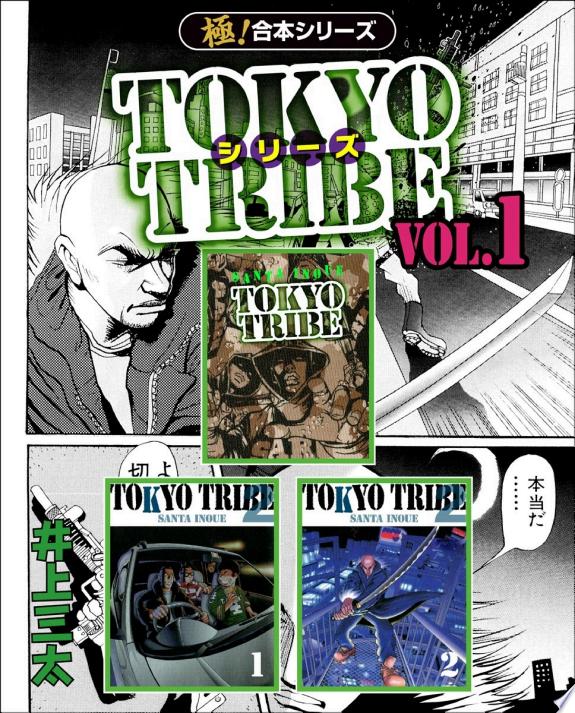
A review of Tokyo Tribes — Santa Inoue's stylized gang manga about youth tribes in a fictionalized near-future Tokyo, where hip-hop culture, street art, and gang warfare intersect in a world built entirely from street aesthetics.
Action / Samurai
Samurai Champloo
A review of the Samurai Champloo manga adaptation — the hip-hop samurai anime's story brought to page, following two fighters and a girl across Edo-period Japan.
Written by
Yu
Manga Enthusiast from Japan
I grew up in Japan and manga literally saved me during a tough time in elementary school. My English isn't perfect, but my love for manga is real — and I want to share it with you.
Disclosure: This post contains affiliate links. As an Amazon Associate, I earn from qualifying purchases at no extra cost to you.