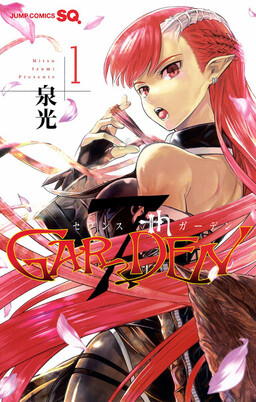
7th Garden Review: A Gardener Picks Up a Demon-Sword Against the Angels Who Run the World — Then the Manga Stops
by Mitsu Izumi
Read the first volume. If it doesn't hook you, put it down. It'll hook you.
Buy 7th Garden on Amazon →*Affiliate link — I earn a small commission at no extra cost to you.
I have a weakness for manga that get cut off mid-sentence. I know that's a strange thing to admit. Most readers want a clean ending, and I understand why. But there's something about a story that stops while it's still reaching for something — you're left holding all the unspent potential yourself. 7th Garden is one of those. I picked up Volume 1 because Mitsu Izumi's name was on the cover and I already loved what he'd go on to do with Land of the Lustrous. What I found was an earlier, rougher, hungrier version of that same artist, swinging at a premise too big for eight volumes — and then the swing just hangs there in the air, because the manga went on hiatus in 2017 and never came back.
So let me be honest with you up front: this is an unfinished story. If that's a dealbreaker, I won't be hurt if you stop here. But if you've ever loved a thing more for the way it failed to finish, keep reading.
Quick Take
- A gardener turns a demon into a living sword to fight the angels who secretly rule the world — the inverted angel-as-oppressor premise is the real hook
- VIZ Media released all 8 English volumes (through 2018), but the Japanese serialization stopped on indefinite hiatus, so the story has no ending
- Age rating: T+ (Older Teen) — fantasy violence, religious iconography, and a steady layer of fan service
Story Overview
The world of 7th Garden is a strange one: two moons hang in the sky, steam engines are the height of technology, and humanity lives under the open, visible rule of angels and a dominant religion called Antiquolism. These angels aren't distant or symbolic. They govern. People obey.
Awyn Gardner is nobody in this order — a seventeen-year-old gardener tending the grounds of an estate in the isolated village of Karna. His one wish is small and human: quiet days near Marie, the lord's daughter he's devoted to. His past isn't quiet, though. His father, a knight commander, was executed in a witch trial, and the family fell from grace. Awyn just wants to keep his head down and keep his garden alive.
Then he falls into a flower-filled pit and wakes something that's been sleeping for centuries — a demon who tells him she intends to fell heaven itself and turn the whole world into her garden. He refuses her. He wants nothing to do with her war.
The refusal doesn't last. The so-called Holy Knights — the Knights Templar who are supposed to protect the country — raid Karna and slaughter the village, Marie among them. In that moment of rage and grief, the demon appears again with her offer: take my power, and you can still save the people of Karna. Awyn accepts. She grants him the power of Demonbellion, transforms her own body into a massive sword for him to wield, and finally gives him her name: Vyrde.
From there the series becomes a war against the angels — Reakeim and the others who rule the world's regions. And here's the wrinkle that gives the manga its identity: Vyrde isn't simply "Vyrde." The angels call her Maria, or Mariane, and the manga plays with the possibility that Vyrde and a gentler personality named Mariane are two sides of the same person — one bent on revenge, one fond of the ordinary life in the manor. The deeper the story goes, the less certain you are about who you're actually rooting for, or what the angels are really protecting humanity from.
The series never answers those questions. Volume 8 leaves off as a new confrontation begins — Isaac (Vulpes) against Awyn and Vyrde — circling a device called Arka, said to hold the power to erase humanity and start the world over. That's where it stops. Not a finale. A held breath.
Characters
Awyn Gardner — A gardener whose entire personality is devotion. First to his garden, then to Marie, then — by force of grief — to Vyrde. His arc is the slow corruption of a gentle, low-status boy into someone willing to enslave himself to a demon and turn that demon into a weapon, all to protect what he loves. The manga is interested in whether a person who keeps choosing the most extreme means for the most tender reasons stays good.
Vyrde / Maria / Mariane — The demon Awyn awakens. Red-haired, theatrical, vengeance-driven, and — by her own account — imprisoned by the angels on charges she calls false. The split between the war-hungry Vyrde and the quieter Mariane who seems attached to her human life is the series' emotional engine. She's the partner, the weapon, the mystery, and possibly the thing Awyn should fear most.
Marie — The lord's daughter Awyn serves and loves. She's the reason he refuses Vyrde, and her death in the Karna raid is the reason he accepts. She is the cost the story extracts to start its plot.
The Angels (Reakeim and the others) — Seven angels who rule the world's regions under the banner of Antiquolism. They are the antagonists, but the manga's whole pitch is that "angel" doesn't mean "good." What their governance actually does to humanity — and whether the demons opposing them are villains or liberators — is the central question. It's also one of the threads the hiatus leaves dangling.
What I Love About It
The inversion. Plenty of manga slap "actually the angels are evil" on the cover and call it a day. 7th Garden does more work than that. It builds a whole apparatus — Antiquolism as a state religion, angels as visible rulers rather than abstract deities, a steampunk society organized around their authority — so that when you start to doubt the angels, you're doubting an entire social order, not just a few characters. The premise has architecture under it. That's rare in a short shonen fantasy, and it's the thing that kept me turning pages even when I could feel the pacing buckling under the weight of everything Izumi was trying to set up.
And then there's the art, which is the other reason I can't quite let this one go. This is the same hand that drew Land of the Lustrous, and even here — earlier, messier, working in a denser shonen register — you can see it. The angel and demon designs are striking, the religious iconography is used with real care, and when Vyrde becomes the sword, the page has a weight to it that most debut-era action manga don't manage. You're watching an artist who's already very good practice on a story that maybe wasn't ready to hold him. It's fan service-heavy, it's tonally uneven, and it's still more visually confident than it has any right to be.
Memorable Scene ⚠️ Spoiler Warning
The contract. Volume 1 spends its opening establishing Awyn as a boy who just wants quiet — his garden, Marie, nothing more — and who flatly turns the demon down when she first offers him power. The manga lets you believe he might actually walk away from the whole thing.
Then the Holy Knights burn Karna. They kill the village, and they kill Marie. And the demon comes back — not gloating, just present — and tells him he can still save the people of Karna if he takes her offer now. He does. She becomes a sword in his hands and gives him her name, Vyrde, and Demonbellion ignites.
What stays with me isn't the spectacle of it. It's the order of events. The manga deliberately makes Awyn refuse first, so that when he accepts, it isn't ambition — it's grief with nowhere else to go. The people who were supposed to protect him are the ones who destroyed everything, and the demon he was warned against is the only hand reaching out. That single inversion, dramatized in the worst moment of his life, is the whole series in miniature. It's just a shame the manga never got to follow that thread all the way down.
Pros & Cons
Pros
- The angel-as-oppressor premise has genuine worldbuilding under it, not just an edgy label
- Izumi's art is visibly the work of the future Land of the Lustrous artist
- The contract sequence frames Awyn's fall with real emotional logic
- The Vyrde / Mariane split keeps the lead genuinely unpredictable
Cons
- It's on indefinite hiatus and has no ending — Volume 8 stops mid-conflict
- The pacing is a mess; it sets up far more than eight volumes can pay off
- Heavy, persistent fan service that not everyone will want
- An unfinished story asks you to be okay with loose threads — that's either a dealbreaker or it isn't, and only you know which.
Is 7th Garden Worth Reading?
If you want a complete story with a satisfying ending, no — it doesn't have one. But if you're drawn to ambitious, art-forward dark fantasy and you can make peace with an unfinished tale, the inverted angels-rule-the-world premise and Izumi's early artistry make these eight volumes worth the gamble. Go in knowing the swing never lands, and you might love it anyway.
Who Is This Manga For?
- Readers who want angel-vs-demon fantasy where the alignment is genuinely in question
- Fans of Land of the Lustrous curious to see Mitsu Izumi's earlier, rougher work
- Anyone who enjoys the demon-contract protagonist structure (think Blue Exorcist, D.Gray-man)
- Readers who can enjoy an unfinished story for what it reaches for, not what it completes
Similar Manga
| Title | Its Approach | How 7th Garden Differs |
|---|---|---|
| Blue Exorcist | Demon-blooded hero fights demons inside a church order | 7th Garden flips it — the angelic/holy side is the oppressor, and the demon is the ally |
| D.Gray-man | Religious supernatural war with ornate iconography | 7th Garden is shorter, more focused on one contract pair, and openly questions which side is righteous |
| Land of the Lustrous | Izumi's later, acclaimed work; quiet, philosophical, gorgeous | 7th Garden is his earlier shonen mode — louder, fan-service-heavy, less polished but recognizably the same eye |
Official English Translation Status
VIZ Media published the complete English run — all 8 volumes, releasing through 2018. So the English editions are exactly as "complete" as the manga ever got: every chapter that exists is available in English. What's missing isn't translation; it's the rest of the story, which Izumi left on indefinite hiatus in Japan.
Where to Buy
Read the first volume. If it doesn't hook you, put it down. It'll hook you.
This post contains affiliate links. If you purchase through these links, I may earn a small commission at no extra cost to you. As an Amazon Associate, I earn from qualifying purchases.
*Affiliate link — I earn a small commission at no extra cost to you.
More Manga You Might Like
Action
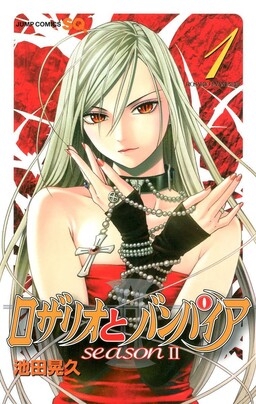
Rosario + Vampire: Season II
Yu's review of Rosario + Vampire: Season II — picking up from the end of Season I, Tsukune Aono and his monster companions return with higher stakes; the series shifts toward darker action with genuine monster-world political conflict while retaining the original's character relationships.
Action / Fantasy
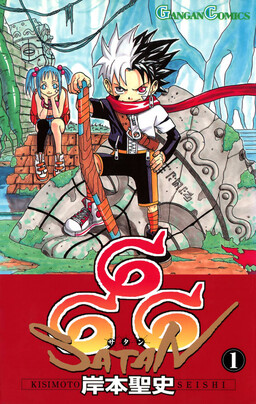
O-Parts Hunter
Yu's review of O-Parts Hunter — Jio Freed is a boy who wants to rule the world but carries a demon called Satan inside him that awakens when he is in danger; he travels a post-apocalyptic world with Ruby, an OPT hunter, in search of legendary O-Parts — ancient relics with extraordinary power.
Action
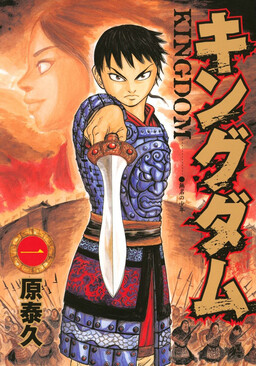
Kingdom
Yu's review of Kingdom — Xin is a war orphan in Warring States China who dreams of becoming the greatest general under the heavens; he encounters the young king Ying Zheng who intends to unify all of China; Yasuhisa Hara's historical epic about the birth of the Qin Empire through the eyes of soldiers and commanders who fought for it.
Action / Comedy
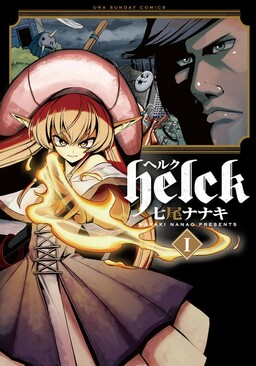
Helck
A review of Helck — 13 volumes in Shōnen Sunday S. A tournament is held to find the next Demon King; Helck, the most powerful human hero, arrives and enters claiming he wants to destroy humanity; demon captain Vermilio tries to expose him as a spy while he proves consistently, genuinely helpful. A fantasy comedy that earns its transition into something serious. VIZ Media's English edition is complete.
Action / Fantasy
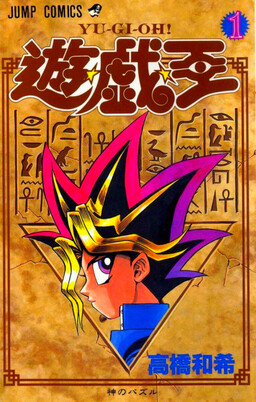
Yu-Gi-Oh!
Yu's review of Yu-Gi-Oh! — Yugi Mutou solves the Millennium Puzzle and his body becomes shared with a spirit of unknown origin; the early series follows the spirit's use of 'shadow games' to punish bullies and cheaters, eventually evolving into the card game tournament arc that the franchise became known for.
Action
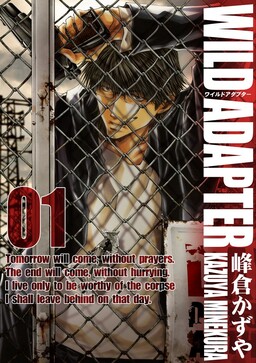
Wild Adapter
Yu's review of Wild Adapter — Makoto Kubota is a Yakuza boy genius who gets drawn into investigating Wild Adapter, a drug that turns users into monsters; he finds Tokito, a boy with no memory and a monster's hand, and takes him home; Kazuya Minekura's crime manga about an unlikely pair and the mystery of a transforming drug.
Written by
Yu
Manga Enthusiast from Japan
I grew up in Japan and manga literally saved me during a tough time in elementary school. My English isn't perfect, but my love for manga is real — and I want to share it with you.
Disclosure: This post contains affiliate links. As an Amazon Associate, I earn from qualifying purchases at no extra cost to you.